

Choosing Profitable Vending Locations That Pay

A machine can look busy for the first week and still become a costly stop on your route. The difference is not just how many people walk past it. Choosing profitable vending locations means finding a repeat customer base, matching the machine to the setting, and making sure the account is practical to service.
For a first vending machine or an expanding fleet, location quality usually matters more than getting the lowest machine price. A reliable snack-and-drink combo unit in the right apartment building can outperform a larger machine placed where people can easily bring their own food and drinks. Start with the business case for the location, then choose equipment that supports it.
Start With Captive Demand, Not Raw Foot Traffic
Foot traffic is useful, but it can be misleading. A shopping center may have thousands of visitors, yet people are there for short trips and have several nearby food options. A manufacturing facility with 80 employees on long shifts may have less visible traffic but much stronger buying behavior.
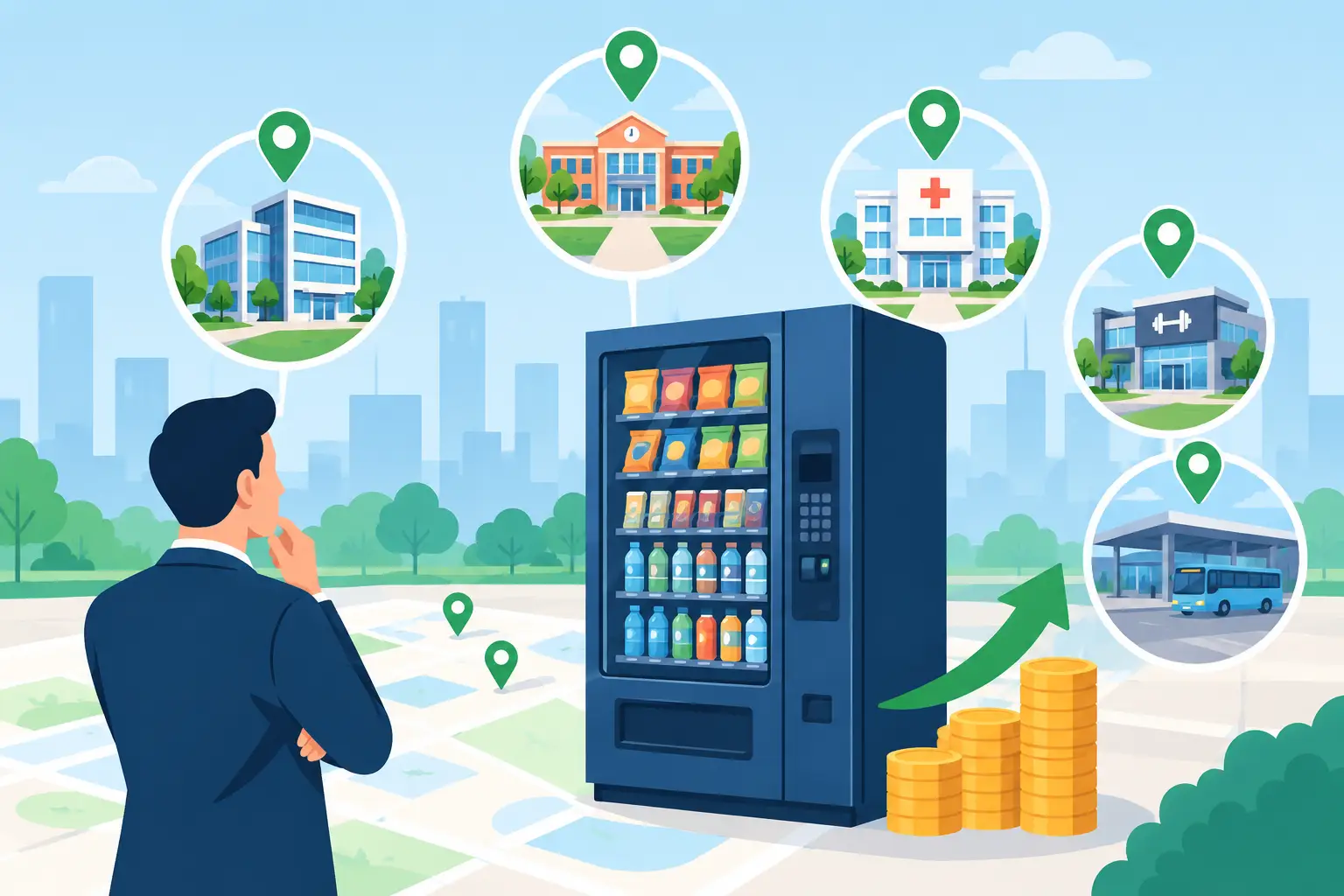
The best accounts tend to have a captive audience: people who spend enough time on-site, have limited alternatives, and regularly need a drink, snack, meal replacement, or convenience item. Think about where employees work overnight, where residents wait for laundry, where customers spend several hours, or where people cannot leave the property easily.
Ask the location contact direct questions. How many people are on-site during a normal day? Are there multiple shifts? Is there a cafeteria, break room, convenience store, or restaurant nearby? Do people bring food from home? Is the building busy on weekends or only Monday through Friday?
A location with 100 people present around the clock can be more valuable than an office with 250 employees who leave at 5 p.m. The goal is not to estimate the largest possible audience. It is to estimate the number of people likely to buy repeatedly.
Evaluate the Location Before You Promise a Machine
A good location must work operationally as well as financially. Before agreeing to install equipment, visit in person whenever possible. Look at the proposed placement area during the time the machine will receive the most use.
You need enough room for the machine, safe access for delivery, a nearby electrical outlet, and a path for restocking. Measure doorways, elevators, hallways, and the final machine area. A large beverage machine may fit in the break room but be impossible to move through a narrow rear entrance.
Also consider visibility and security. Machines placed behind a locked employee door may generate steady sales if employees have easy access. Machines in an unmonitored public lobby may face vandalism, misuse, or higher theft risk. The strongest placement is generally visible, convenient, well-lit, and close to where people naturally take breaks or wait.
Check cellular signal before committing to card-reader or smart vending equipment. Cashless payment is often essential, especially in offices, gyms, apartment communities, and younger customer demographics. But the payment system needs dependable connectivity. If the signal is weak, ask whether the site offers approved Wi-Fi access or whether a different machine position would solve the issue.
Match the Machine to the Account
The machine format should follow the location’s demand, not personal preference. Buying a large new machine for every account can tie up capital that would be better used to add more profitable stops. On the other hand, putting a small used unit in a high-volume site can lead to empty selections, frequent service trips, and lost sales.
Offices, warehouses, and industrial sites
These accounts often support snack-and-drink combo machines or separate snack and beverage machines. Shift-based facilities may need larger capacity because customers buy at different hours and service windows can be limited. Cold beverages, energy drinks, salty snacks, candy, protein products, and meal-replacement options commonly perform well, but the product mix should reflect the workforce.
A warehouse with physically active employees may need more bottled water, electrolyte drinks, and substantial snacks than a professional office. Give the location a practical mix first, then adjust based on sales data rather than assumptions.
Apartments, laundromats, and residential communities
Residents and laundry customers usually value convenience over a huge selection. A reliable drink machine, snack-and-drink combo, or specialty machine can work well near laundry rooms, clubhouses, and common areas. These sites may produce steady sales throughout the week, but they can be slower than a busy workplace during daytime hours.
Security, access hours, and who pays for electricity matter here. Confirm whether residents, property staff, or the operator will report machine issues. A machine that is tucked away where no one sees it may not generate enough sales to justify repeated service calls.
Bowling centers, gyms, and entertainment venues
These locations can be profitable because customers spend time waiting, playing, or socializing. Demand often peaks in the evening and on weekends. Beverage machines and modern cashless options are especially useful when customers do not carry cash.
The trade-off is seasonal or event-driven volume. Ask for attendance patterns, league schedules, event calendars, and existing concession hours. A vending machine may do well when the snack counter is closed, but struggle if it directly competes with a full-service concession stand all day.
Retail and public-facing locations
Public settings can offer volume, but they require a closer look at security, competition, and site rules. A machine in a retail waiting area may perform well if customers wait for service. A machine near a grocery store or convenience retailer is less likely to win on standard snacks and soda alone.
In these accounts, consider whether specialty products, cold food, smart coolers, or an AI-powered unattended retail setup creates a better fit than conventional vending. Higher-tech equipment can expand product flexibility, but it also requires a location with the right customer behavior, internet access, and sales potential to justify the investment.
Run the Numbers on Profit Per Service Visit
Sales alone do not make a vending location profitable. A $300-per-month location may be a poor account if it requires long drives, frequent refunds, complex parking, or several hours of restocking. A slightly lower-volume machine on an existing route may produce better net income.
Estimate monthly revenue, product cost, card processing fees, commissions, fuel, labor, repairs, and any rent or utility charges. Then factor in service frequency. A location that sells through drinks twice a week may need a higher-capacity machine, a better product selection, or more frequent visits than your route can support.
Use a simple site scorecard before saying yes. Rate each opportunity on these factors:
- Number of regular on-site customers and hours of access
- Availability of nearby food, beverage, and convenience alternatives
- Expected monthly sales and gross profit potential
- Delivery access, parking, security, and service time
- Power, cellular signal, and cashless payment compatibility
- Commission requirements, contract terms, and route distance
No scorecard replaces judgment, but it prevents a friendly prospect or a busy-looking building from becoming an unprofitable account. Compare every new site to the stops already working on your route.
Negotiate a Clear Placement Agreement
Many vending problems begin because the operator and location owner had different expectations. Put the key terms in writing before installation. The agreement should identify the machine type, exact placement area, who provides electricity, access hours, commission percentage if any, and how either party can end the arrangement.
Be careful with commission requests. A commission can make sense for a high-volume account with strong demand and low servicing costs. It is harder to support at a small office with uncertain sales. Do not agree to a percentage before you understand the likely revenue and expenses.
Clarify exclusivity as well. If the location plans to add another vending operator, install a free coffee station, or expand food service, that can change your sales quickly. You also need a contact who can authorize access, report issues, and communicate about machine moves or building closures.
Test, Track, and Be Ready to Reposition
Even a well-researched placement is still a test. Give a new machine enough time to establish normal purchasing patterns, then review sales by product, payment type, and day of week. Cashless sales data and inventory reporting can make this easier, particularly when you are managing multiple locations.
Do not judge a site only by total revenue. Look for out-of-stock favorites, slow-moving selections, refund patterns, and whether customers are buying at the times you expected. A product change, better signage, or a move closer to the break area can improve results without replacing the machine.
If sales remain weak after reasonable adjustments, reposition the equipment. Machines are business assets, and an underperforming stop should not hold one hostage indefinitely. VendingMachinesForSale.net offers machine categories ranging from conventional snack and beverage equipment to smart retail options, so you can select a format that fits the next opportunity instead of forcing the wrong machine into the wrong account.
The most dependable locations are rarely the ones with the flashiest lobby or the biggest stated headcount. They are the places where people have a regular need, an easy way to pay, and a machine stocked with products they actually want. Find that combination, document the terms, and build your route one productive stop at a time.