

What Is a Smart Store for Vending Operators?

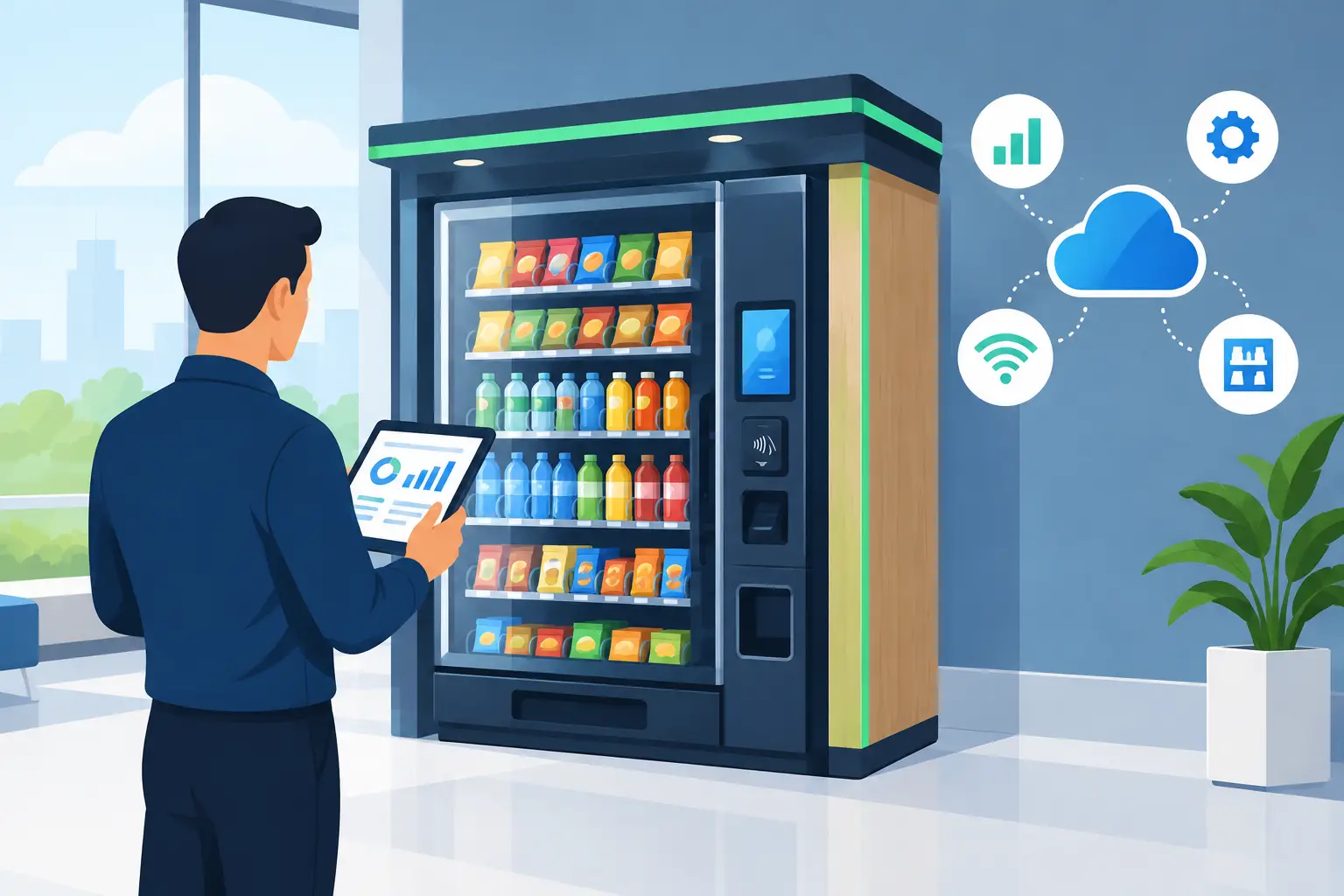
A break room with 150 employees may have enough demand for more than a snack machine, but not enough space or payroll budget for a staffed café. That is where the question, what is a smart store, becomes a practical business question rather than a technology trend. A smart store gives customers a self-service retail experience with a broader product mix, cashless payment, and automated sales tracking – without requiring a cashier on site.
For vending operators, it can be a way to win larger accounts, raise average transaction value, and sell products that do not fit neatly into a traditional spiral machine. For a location owner, it can mean better food and beverage access without managing employees, inventory, or a register.
What is a smart store?
A smart store is an unattended retail setup where customers select products from open shelving, coolers, freezers, or cabinets and pay through an automated system. Depending on the equipment, a shopper may tap a card or mobile wallet to enter, take items, and have the purchase charged automatically when they leave. Other smart stores use a touchscreen checkout, barcode scanning, weight sensors, or camera-based product recognition.
The defining feature is not one specific machine. It is the combination of retail-style product access and technology that records the sale without a cashier. A smart store can be as compact as an AI-powered smart cooler or as large as a dedicated micro market with multiple refrigerated units, shelving, and a self-checkout kiosk.
That flexibility makes smart stores attractive for offices, apartment communities, hotels, hospitals, manufacturing facilities, college housing, gyms, and other locations where people want more choice than a standard vending machine provides.
How a smart store works for the customer
The customer experience is usually simple. A shopper identifies themselves with a credit card, debit card, mobile wallet, app, or access credential. They open a smart cooler or enter the retail area, choose what they want, and close the door or complete their transaction at a kiosk.
Behind that simple experience, the system identifies the products removed and processes payment. A camera-based smart cooler may recognize items through computer vision. A sensor-based unit may compare product weight before and after a visit. A kiosk-based micro market may rely on barcodes or a touchscreen product lookup.
Each method has trade-offs. Camera and AI systems can create a fast, low-touch experience and reduce the need for product barcodes. Barcode checkout can be less expensive and is familiar to customers, but it adds a step and may be more vulnerable to missed scans. The best fit depends on the location, available budget, product mix, and expected traffic.
Smart stores versus traditional vending machines
Traditional vending remains a strong option for many locations. It is compact, familiar, and often easier to place in smaller spaces. A snack, drink, or combo machine also provides controlled dispensing: the customer can only receive an item after completing a purchase.
A smart store changes that model. Customers can pick up a sandwich, compare two beverages, read nutrition information, or buy several items at once. This open-access format supports a wider product selection, including fresh meals, protein products, specialty drinks, refrigerated dairy items, and local products.
The trade-off is that smart stores require more operational attention. Operators need to plan product layout, manage expiration dates, keep coolers clean, review inventory data, and account for shrink. They also need a dependable payment and connectivity setup. A smart store is not automatically better than a vending machine – it is better when the account has enough traffic and demand for variety to justify the investment.
Why operators add smart stores to a vending route
The strongest case for a smart store is usually revenue per location. An account that has outgrown one or two vending machines may generate more sales when customers can buy a complete lunch, a cold brew, a salad, or several grab-and-go items in one visit.
Smart stores can also help an operator compete for premium placements. Property managers and employers increasingly want employee amenities that feel more like retail than vending. A clean, well-stocked unattended market can become part of an office, apartment, or workplace amenity package.
There is also a merchandising advantage. In a traditional vending machine, every product must match a selection, coil, or delivery system. In a smart store, operators can test a broader assortment and adjust it based on sales data. If energy drinks sell faster than bottled soda at one location, or fresh meals perform only on weekdays, inventory can be tailored to that account.
For established operators, a smart store can diversify a fleet built around snack and beverage equipment. For first-time business owners, it may be a larger opportunity with a larger learning curve. Starting with a smaller smart cooler or cashless vending unit can be a more manageable entry point than building a full micro market immediately.
The equipment inside a smart store
A smart store can be built around different equipment configurations. The right layout should match the location rather than follow a one-size-fits-all model.
A compact setup may use one or two intelligent coolers for drinks, sandwiches, and fresh food. This works well in smaller offices, boutique gyms, or apartment common areas where space is limited but customers want refrigerated choices.
A larger location may need several components working together:
- Smart coolers or refrigerated cabinets for beverages, meals, dairy, and cold snacks
- Open shelving for chips, candy, protein bars, and shelf-stable products
- A freezer for frozen meals, ice cream, or specialty items where demand supports it
- A kiosk or AI-enabled access system for payment and transaction tracking
- Digital signage, security cameras, or branded fixtures to improve visibility and accountability
Not every store needs every component. A manufacturing plant operating around the clock may benefit from fresh food capacity and multiple payment options. A 60-unit apartment building may need only a compact cooler and a small shelf section. Oversizing a location ties up capital and creates avoidable product waste.
What to evaluate before buying
Before purchasing smart store equipment, start with the account. Ask how many people use the location each day, when they are present, what food options already exist nearby, and whether the location has enough room and electrical capacity. A busy location with limited nearby food service is generally more promising than a high-headcount office where employees leave for lunch every day.
Next, review payment capability. Cashless acceptance is essential for most smart-store concepts, and mobile-wallet support can improve convenience. Confirm whether the equipment requires Wi-Fi, cellular service, a dedicated network, or a specific software platform. Poor connectivity can create payment failures and remote-monitoring gaps.
Product strategy matters just as much as hardware. Fresh food may increase ticket size, but it also introduces tighter delivery schedules, spoilage risk, and food-safety requirements. Shelf-stable snacks are easier to manage but may not generate enough sales to support a larger format. Many operators begin with beverages, snacks, protein items, and a limited fresh-food offering, then expand based on actual sales.
Finally, calculate the full operating cost rather than focusing only on machine price. Consider equipment, freight, installation, payment processing, software fees, inventory, insurance, servicing, and labor for restocking. A lower-cost system can be the right choice if the account is unproven. A more advanced AI-enabled setup may make sense when it helps secure a high-volume placement or reduces checkout friction enough to lift sales.
Managing shrink and keeping the store profitable
Because customers can handle products before checkout, shrink is a real consideration. It should be planned for, not treated as a reason to avoid the category. The right technology, store layout, product placement, and account agreement can reduce losses substantially.
AI-based access control, cameras, transaction records, and controlled entry can add accountability. Clear signage and a clean, professional setup also matter. People are more likely to treat the space as a legitimate retail store when it is stocked, organized, and visibly maintained.
Inventory reporting is equally valuable. Operators should review which products sell, which expire, what time of day transactions occur, and whether stockouts are costing sales. A smart store earns its place in a route when data leads to better restocking decisions, not when it simply adds more equipment to manage.
Choosing the right smart-store format
For an operator with a promising account, the question is not whether a smart store is modern. The question is whether it is commercially appropriate. A small, cashless smart cooler may be enough for a compact location. A larger micro market can make sense where there is consistent traffic, limited food access, and demand for meals as well as snacks.
VendingMachinesForSale.net offers equipment options across standard vending, cashless units, and technology-forward smart-store formats, allowing operators to compare a practical entry setup with a larger unattended retail investment. The best purchase is the one that fits the account’s traffic, available space, product demand, and operating plan.
A smart store should make the next sale easier for the customer and the next restock smarter for the operator. Start with the location’s real buying habits, build the format around them, and let sales data determine what comes next.