

Vending Machines for Bowling Alleys That Sell

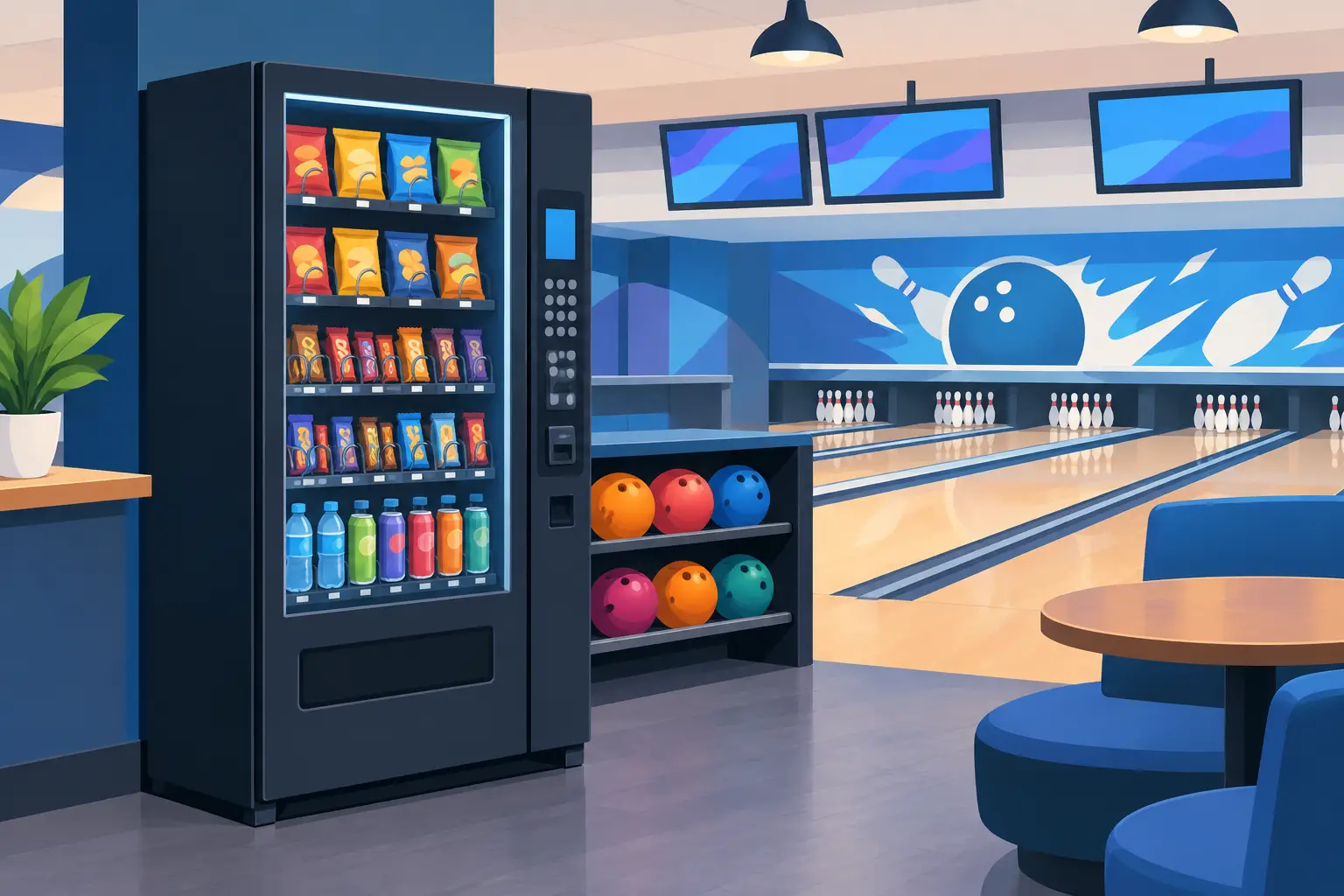
A bowler who steps away from lane 12 for a drink or a quick snack is already a ready customer. The question is whether your vending machines for bowling alleys are stocked, visible, and equipped to complete that sale before the next frame starts. For bowling center owners and vending operators, this is a high-opportunity placement with repeat traffic, long dwell times, and demand that changes by the hour.
Bowling is not a quick-stop activity. League players may be in the building for several hours, families settle in for parties, and late-night guests often want an affordable alternative to the snack bar. A properly matched vending setup can add unattended sales during busy periods and continue serving guests when food service is limited.
Why Bowling Centers Are Strong Vending Locations
The best vending locations combine foot traffic with time on site. Bowling alleys have both. Customers are typically waiting between turns, supervising children, watching friends bowl, or taking a break from arcade games and other attractions. That creates frequent, low-friction buying moments.
The customer mix also supports a broad product selection. League nights can favor energy drinks, bottled water, soda, nuts, protein bars, and salty snacks. Family weekends bring demand for familiar chips, candy, juice, and kid-friendly drinks. If the location serves alcohol, water, soda, and snacks become even more relevant later in the evening.
There is a practical limit: vending should complement the center’s food and beverage program, not create conflict with it. A bowling center with a full kitchen may want vending focused on packaged drinks, quick snacks, and late-night availability. A smaller facility with limited concessions may support a wider snack-and-drink assortment. Talk through product categories and placement before installing equipment.
Choosing Vending Machines for Bowling Alleys
A snack-and-drink combo machine is often the strongest starting point for a bowling location. It offers variety without requiring two separate machine footprints, which matters near entrances, waiting areas, and arcade zones. For a first-time operator testing a location, a combo unit can control startup cost while showing what customers actually buy.
Separate beverage and snack machines can make more sense in a large bowling center with high-volume leagues, birthday parties, and weekend traffic. Beverage machines generally handle fast-selling bottled drinks well, while a dedicated snack machine provides more selections and larger capacity. This format gives experienced operators more room to build the product mix around sales data.
Start with the available space and power
Before selecting a machine, measure the installation area, doorway clearance, and route from delivery access to the final location. A machine that fits the floor plan but cannot get through a back hallway creates an expensive problem. Confirm the outlet type, electrical capacity, and whether the center wants equipment against a wall, in a lobby, or beside the arcade.
Keep service access in mind. The operator needs room to open the machine, load products, clean the area, and perform basic maintenance. Avoid placing equipment where crowds, party tables, or rental shoe traffic block the machine door.
Match capacity to real traffic
Buying the biggest machine available is not always the best move. Large-capacity equipment can reduce service visits at a busy center, but it also requires more inventory investment and may leave slower selections sitting too long. A smaller or used machine can be a sensible entry point if the account is new or its traffic pattern is unproven.
Ask the location for its schedule. League nights, school breaks, tournament weekends, and party bookings can create large spikes in demand. An operator servicing the location once a week may need more capacity than one who is nearby and can restock quickly after a busy Friday or Saturday.
Cashless Payments Are Usually a Requirement
Bowling customers often arrive without cash, especially families and younger guests. A card-reader-enabled machine lets customers pay with credit cards, debit cards, and mobile wallets, reducing abandoned purchases at the machine.
Cashless acceptance also gives operators useful reporting. Instead of guessing what sold, you can review product performance, transaction volume, and peak sales times. That information helps you adjust prices, remove low performers, and schedule service around the center’s busiest periods.
Cash acceptance still has a place in some markets. League players, arcade visitors, and certain local customer bases may use bills or coins. The practical approach is not cash versus cashless. It is giving customers the payment options the location needs while choosing equipment that keeps operating costs manageable.
For a premium bowling venue or entertainment complex, smart coolers and AI-powered unattended retail can be worth considering. These systems can present a more open retail experience and allow shoppers to choose multiple items at once. They require the right environment, product controls, and budget, so they are better suited to locations with sufficient traffic and a modern self-service strategy than to every neighborhood alley.
Build a Product Mix Around Bowlers
The strongest product mix is usually familiar, fast-moving, and easy to eat between frames. Start with a balance of cold beverages, salty snacks, candy, better-for-you options, and a few higher-value items. Then let sales determine what stays.
Beverages often carry the location. Bottled water, sports drinks, energy drinks, soda, iced tea, and juice can all work, but the right mix depends on the audience. A family bowling center may move more water and juice. A late-night league venue may see stronger sales of energy drinks, sports drinks, and soda.
Snack selections should be convenient and durable. Chips, pretzels, cookies, crackers, candy, trail mix, jerky, and protein bars are reliable starting categories. Avoid loading too many specialty products before you have sales data. A broad assortment sounds appealing, but every slow-moving selection ties up capital and occupies a slot that could hold a proven seller.
Pricing should account for product cost, card processing, machine service, commission arrangements, and local competition. Guests expect to pay more for convenience inside an entertainment venue, but prices still need to feel reasonable. Small, consistent price testing is more useful than large increases that can reduce repeat purchases.
Placement Can Matter More Than Machine Style
Put the machine where people pause naturally. Near the entrance, shoe rental counter, arcade, lounge entrance, party room hallway, or exit can work well. The ideal placement is easy to see without disrupting the center’s flow.
Do not hide vending equipment in a back corner simply because there is an empty outlet. Visibility drives impulse sales. At the same time, keep machines away from direct splashing, food prep areas, and spots where bowling bags or crowds can damage the equipment.
If a snack bar is closed during certain hours, place a small sign at the counter directing guests to the vending area. The goal is not to pull business away from open food service. It is to capture sales when customers cannot or do not want to wait in line.
Set Up a Service Plan Before Installation
A good location can still underperform if the machine is dirty, out of stock, or filled with expired products. Bowling centers are active environments, and a machine near an arcade or entryway may need more frequent cleaning than an office location.
Create a service routine that covers inventory, product dates, bill validator performance if applicable, card reader status, refrigeration temperature, and exterior cleaning. Stock more heavily before leagues, tournaments, holiday weekends, and scheduled party events. If sales reports show that a product sells out early every Friday, increase its facing rather than waiting for the next route visit.
Also agree on the business arrangement in writing. Clarify where the machine will sit, who supplies electricity, access hours for restocking, responsibility for damage, any commission structure, and the expected notice period if the machine must be removed. Clear terms protect both the bowling center and the operator.
New, Used, or Smart Equipment?
The right purchase depends on your budget, route goals, and the account’s earning potential. A used commercial machine can be an affordable way to start a vending business or test a bowling placement, particularly when the equipment has been inspected and supports the payment setup you need. It may require more attention to condition, parts availability, and cosmetic appearance.
New machines offer updated components, a cleaner presentation, and options such as modern payment hardware and higher efficiency. They are often the better fit for owners building a long-term route or replacing equipment at a busy location. VendingMachinesForSale.net offers conventional, used, cashless-ready, and technology-forward equipment so buyers can compare formats based on the location rather than buying a one-size-fits-all machine.
Smart retail formats can raise the customer experience, but they should be evaluated like any capital purchase. Consider traffic, theft risk, product assortment, operational support, and expected return before choosing an AI-enabled system over a traditional machine.
The most profitable setup is rarely the flashiest one. It is the machine that fits the bowling center’s traffic, takes the payments guests use, stays full during peak hours, and earns enough per visit to justify your service time. Start with that standard, watch the data after installation, and let each busy league night tell you what to add next.