

Smart Stores Versus Vending Machines Compared

A break room with 250 employees, a 24-hour apartment lobby, and a busy laundromat may all need unattended retail. But they do not necessarily need the same equipment. The decision between smart stores versus vending machines affects your startup cost, product selection, service routine, and how much revenue a location can realistically produce.
Traditional vending machines remain a practical way to start a vending business or expand an established route. They are familiar, compact, and built for controlled product categories. Smart stores offer a more open retail experience, usually with a smart cooler, shelving, cashless checkout, and technology that tracks what customers take. For the right location, that flexibility can raise average sales. For the wrong location, it can add cost and operational complexity without enough return.
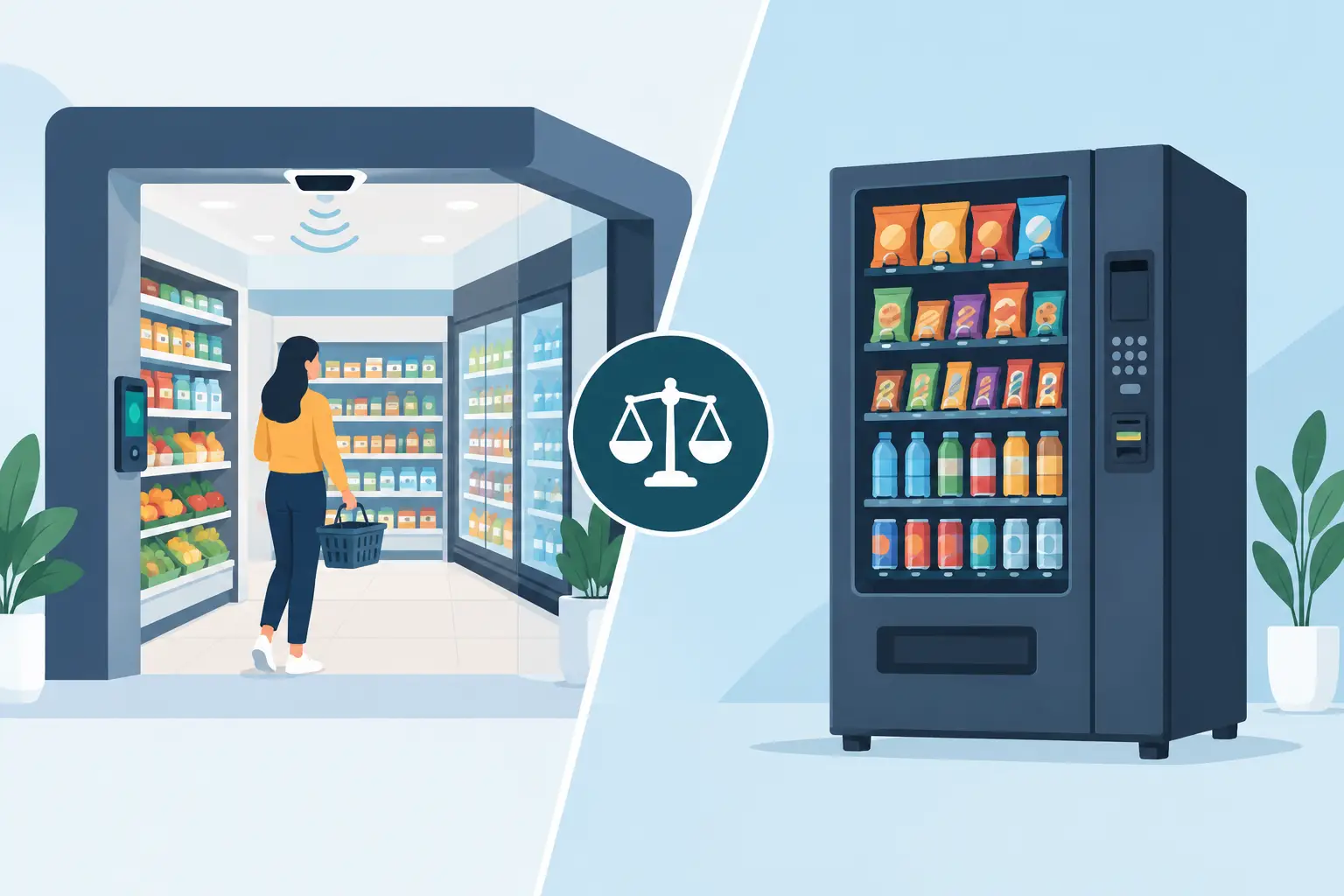
Smart Stores Versus Vending Machines: The Core Difference
A vending machine sells products through individual selections. The customer chooses an item, pays at the machine, and receives the product from a delivery bin. A snack machine, beverage machine, or combo unit has a defined number of product slots, known capacity limits, and predictable restocking procedures.
A smart store works more like a small self-service market. Customers may open a smart cooler, select several items, and use an app, card, kiosk, or other cashless payment process depending on the system. The setup can include refrigerated product displays, open shelving for snacks and pantry items, and a wider range of merchandise than a standard vending cabinet can hold.
The difference is not simply old technology versus new technology. It is a difference in retail format. Vending controls the sale one item at a time. A smart store gives customers more freedom to browse, bundle products, and buy items that may be difficult to vend through a coil or elevator system.
When a Vending Machine Is the Better Business Move
For many first-time operators, a vending machine is the more manageable entry point. A used snack or beverage machine can keep acquisition costs lower while allowing you to test a location and learn the basics of product purchasing, pricing, stocking, and collections. New machines with card readers can provide a modern payment experience without requiring an entirely different operating model.
Vending is especially effective when space is limited or demand is straightforward. A laundromat may need cold drinks, laundry supplies, snacks, and a few everyday items. A small office may only support one snack-and-drink combo machine. A bowling center may benefit from beverages and packaged snacks near the waiting area. In these placements, a full smart store may be more equipment than the location needs.
Traditional machines also offer tighter inventory control. Each selection has a designated slot, so it is easier to identify what needs refilling and what is not moving. That matters when you are operating a growing route and want service visits to stay efficient. You can standardize popular products across multiple machines, buy inventory in larger quantities, and train employees on a repeatable restocking process.
There are limits. Standard vending machines can struggle with irregular package shapes, fresh food, larger bottles, premium items, and products that customers prefer to browse before buying. Capacity is fixed, too. If a high-traffic location empties a machine between service visits, lost sales add up quickly.
Where Smart Stores Can Create More Sales
A smart store makes the strongest case in locations with a larger customer base, extended operating hours, and a real need for more choice. Think apartment communities, distribution centers, hospitals, hotels, university housing, manufacturing facilities, and corporate campuses. These customers may want a drink and snack at one moment, then a meal, personal-care item, or household essential later in the day.
Because customers can purchase multiple items in one visit, smart stores can support a higher average transaction. An employee who would buy one soda from a vending machine may buy a drink, a protein bar, and a refrigerated sandwich from an open-market setup. That additional basket size is one reason smart stores are attractive to operators with strong placement opportunities.
Product flexibility is another advantage. Beyond packaged snacks and beverages, a smart store can carry fresh food, frozen items where equipment allows, healthier choices, specialty drinks, over-the-counter essentials, and location-specific merchandise. An apartment property might sell quick meals and household basics. A factory break room may need filling meal options for overnight shifts. The ability to adjust the mix can turn an unattended setup into a useful on-site convenience store.
Still, more choice requires better merchandising and tighter inventory planning. Fresh products have expiration dates. Open shelves need to look organized. Refrigerated units must be monitored carefully. If the location does not generate enough traffic, a broad product mix can lead to slow-moving inventory and waste.
Compare Startup Cost to Revenue Potential
Equipment price should be considered alongside placement quality. A conventional vending machine generally has a lower purchase price than a full smart store configuration, particularly if you select used equipment. That lower entry cost can make it easier to put machines into several smaller locations rather than committing a large share of capital to one account.
A smart store usually requires a larger upfront investment because it may include smart coolers, checkout technology, shelving, cameras or sensors, and a more substantial installation. It can also require more planning with the property owner. You need enough floor space, reliable power, a suitable internet connection when required, and a clear agreement about access and service.
The higher cost can be justified when the location has the traffic and spending potential to support it. A smart store placed in a large apartment complex with limited nearby food options may produce sales that a single vending machine could never capture. On the other hand, installing an advanced setup in a small office with 30 employees may delay payback without improving the customer experience enough to matter.
Before buying, estimate the location’s daily population, hours of operation, nearby retail competition, and expected purchase frequency. Ask whether people are on site during meal periods, whether they can easily leave the property, and whether the location already has food service. Those answers matter more than a machine’s appearance or feature list.
Payments, Theft Risk, and Daily Management
Cashless payment capability is no longer a premium extra for many placements. Card readers and mobile payment options can help capture sales from customers who do not carry cash. Whether you choose a vending machine or smart store, confirm that the payment method fits the customer base and that you understand any service, connectivity, or transaction fees.
Smart stores require special attention to loss prevention. Depending on the technology, the system may track purchases automatically or require customers to check out through a kiosk or app. The location needs a layout that is visible, secure, and practical for customers. A poorly placed unattended market can experience shrink, product damage, or checkout confusion.
Vending machines have their own service needs, including bill validators, coin mechanisms, refrigeration systems, product jams, and card reader connectivity. Their advantage is that the selling area is enclosed. Products are not accessible until payment is completed, which simplifies control in many public settings.
For either format, reliable equipment is only part of the operation. Your profit depends on route planning, service frequency, product margins, pricing discipline, and fast response when a location reports a problem. Choose equipment you can maintain and stock consistently, not just equipment with the most features.
How to Match the Format to the Location
The best purchase decision starts with the account, not the catalog. A compact combo machine fits locations where one cabinet must cover snacks and drinks. Separate snack and beverage machines make sense when demand is higher and you need greater capacity. Specialty machines can solve specific needs at laundromats, tobacco retailers, or entertainment venues.
A smart store is worth evaluating when the location needs an expanded assortment and has enough daily traffic to keep that assortment turning. It is also a strong option when a property manager wants an amenity that feels more like retail than a standard vending area. In those cases, presentation, product variety, and cashless convenience can help you win the account.
VendingMachinesForSale.net offers conventional, specialty, used, and technology-forward equipment so operators can compare machine types based on the placement instead of forcing every location into one model. A lower-cost machine can be the right asset for a new route. A smart store can be the right next step for a proven high-volume account.
Make the First Purchase Fit Your Operating Plan
If you are starting with limited capital, prioritize a dependable machine format, cashless capability where your location expects it, and products you can replenish without overextending your inventory budget. Build service habits and learn what sells before expanding into more complex setups.
If you already operate a route, review your strongest accounts for missed sales. Are customers asking for meals, healthier choices, larger drinks, or more essentials? Are machines selling out too quickly? Those are practical signs that a smart store or expanded market format may have a place in your fleet.
The right equipment is the one your location can support and your operation can service profitably. Start with the customer traffic in front of you, then choose the format that gives those customers a reason to buy again tomorrow.