

Smart Stores for Profitable Unattended Retail

A traditional snack machine can sell a candy bar, a soda, or a bag of chips. Smart stores can sell a much wider retail mix from the same unattended footprint: fresh food, energy drinks, premium snacks, personal care items, meal kits, and products that do not fit neatly behind a vending spiral. For operators, that difference can turn a good location into a stronger revenue opportunity.
Smart store equipment is not the right answer for every account. It requires a location with the right traffic, customer trust, and product demand. But for offices, apartment communities, hospitals, hotels, gyms, colleges, and manufacturing sites, it can be a practical way to move beyond standard vending and build a higher-value unattended retail operation.
What Are Smart Stores?
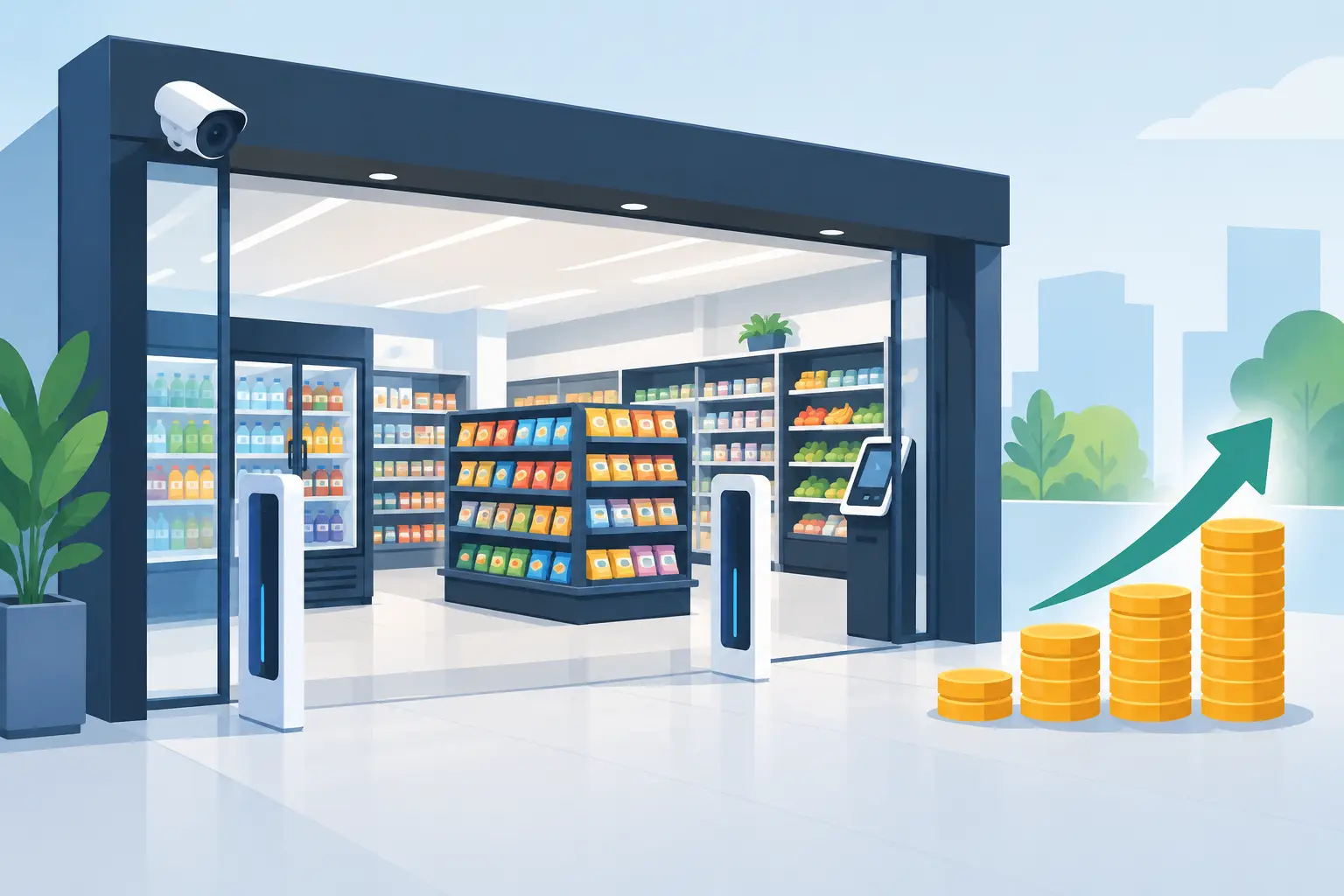
A smart store is an unattended retail setup that lets customers enter or access a self-service area, choose products from open shelves or coolers, and pay electronically. Depending on the system, checkout may happen through a self-checkout kiosk, a smart cooler door, a mobile app, barcode scanning, weight sensors, cameras, or AI-supported product recognition.
The defining feature is open merchandising. Instead of selecting one item through a glass-front machine, the customer can browse products as they would in a small convenience store. That creates room for larger items, more package sizes, fresh products, and merchandise with higher selling prices.
A smart store may be as simple as a card-reader-enabled smart cooler paired with shelving and a kiosk. It may also be a more complete micro market with multiple coolers, racks, checkout equipment, digital displays, and remote management technology. The right format depends on the location, budget, and expected sales volume.
Why Operators Are Adding Smart Stores
The business case starts with product flexibility. Traditional vending machines remain dependable assets for many routes, particularly where space is tight or sales volume is moderate. Their fixed product slots also make inventory simple to control. Smart stores give operators more freedom when a location can support a broader selection.
Fresh sandwiches, salads, yogurt, protein packs, frozen meals, large bottled drinks, and multipack items are difficult or impossible to offer in a conventional snack machine. In an open retail format, those items can be displayed in a more familiar way. Customers may be more likely to buy when they can see labels, compare options, and choose items without the limits of a vending column.
Smart stores can also support a higher average sale. A worker grabbing lunch may add a drink and snack. A resident in an apartment building may purchase a frozen meal, detergent, or household item after regular retail hours. Those are different purchase occasions than a quick vending stop, and they can create more revenue per transaction.
Cashless payment is another major advantage. Most smart store concepts are built around card, mobile wallet, or app-based checkout. That reduces cash collection duties and gives customers the payment options they expect. Transaction data can also help operators identify fast-moving products, weak sellers, and the times when a location needs service.
Where Smart Stores Work Best
A smart store needs enough recurring traffic to justify the equipment, installation, product assortment, and servicing schedule. It performs best where people spend time and have limited access to nearby food or convenience retail.
Large offices and manufacturing facilities are common fits because employees need drinks, snacks, and meals throughout the workday and during later shifts. A location with 100 people can be worthwhile if its workforce is on site for long hours and has few nearby options. A location with 300 people may still underperform if employees leave the building easily for lunch. Headcount matters, but behavior matters more.
Apartment complexes can be strong candidates when they have a large resident base, controlled access, and a visible common area. Hotels, hospitals, student housing, fitness centers, and distribution centers can offer similar demand. In these settings, convenience is the product. A store that is available at 10 p.m. can win sales that a nearby retailer cannot.
Before buying equipment, ask the location manager direct questions. How many people use the site each day? What hours are they present? Is there a cafeteria, convenience store, or food delivery option nearby? Is there secure space with reliable power and internet access? The answers will help determine whether to place a full smart store, a smart cooler, a combo vending machine, or a more conventional snack-and-drink setup.
Choosing the Right Smart Store Format
The smallest entry point is often a smart cooler. Customers use a card or mobile payment method to access the cooler, take products, and are charged based on the system’s checkout process. This format can work well in smaller offices, salons, apartment clubhouses, and locations where fresh drinks, sandwiches, and grab-and-go food are the main opportunity.
A larger micro market-style store adds shelving, snack racks, multiple refrigerated units, and a checkout station. This arrangement supports a deeper product mix and may be appropriate for a workplace or property with sustained traffic. It also requires more upfront investment, more inventory, and stronger merchandising discipline.
AI-supported retail systems can reduce friction at checkout by recognizing items or tracking selections through integrated technology. They can be attractive for operators focused on modern customer experience and detailed sales data. However, advanced equipment comes with a higher purchase price and may require specific network, installation, and service considerations. The best technology is not always the most advanced option. It is the option that fits the location and can be operated consistently.
When comparing equipment, focus on the commercial details: refrigeration capacity, shelf configuration, payment hardware, connectivity requirements, product-recognition method, warranty coverage, dimensions, and service access. A smart store should be easy to refill, clean, and monitor, not just impressive in a sales presentation.
Product Mix Drives the Return
A wider product selection is valuable only when it is managed well. Smart stores give customers more choices, but too many slow-moving products can tie up cash and increase waste. Fresh food in particular needs reliable rotation, temperature control, and clear expiration-date procedures.
Start with products that match the location. In an office, that may mean energy drinks, sparkling water, premium coffee beverages, protein snacks, sandwiches, salads, and quick lunch options. In an apartment building, add household basics such as laundry supplies, toiletries, phone chargers, and late-night meal options. At a gym, focus on water, electrolyte drinks, protein products, and healthier snacks.
Price for convenience while staying competitive with the customer experience. A smart store is not a supermarket, and it does not need supermarket pricing. At the same time, prices that feel unreasonable will reduce repeat visits. Review sales data regularly, test new items in small quantities, and replace weak products before they become dead inventory.
Shrink is another reality to plan for. Open retail environments can experience product loss through mistakes, misuse, or theft. Access controls, cameras, system alerts, store layout, and a well-matched location all play a role in reducing that risk. A controlled workplace or resident-only building is generally easier to operate than an unrestricted public site. Build a reasonable shrink allowance into your financial projections rather than assuming every stocked item will become a paid sale.
Costs and Operational Trade-Offs
Smart stores can produce stronger sales than a standard machine, but they are not passive from day one. Equipment costs vary widely based on the size of the setup, refrigeration needs, checkout technology, and whether the equipment is new or used. You also need to budget for products, delivery or installation, card processing, connectivity, insurance, servicing, and replacement inventory.
A first-time operator may be better served by starting with one smart cooler or a smaller cashless setup rather than building a full market immediately. This limits the initial investment while providing real sales data from the location. Established route operators may have the product sourcing, service routes, and account relationships needed to support a larger store from the start.
Internet reliability deserves careful attention. Most smart systems depend on connectivity for payments, inventory reporting, and customer access. Confirm whether the location provides stable Wi-Fi or whether the equipment will need cellular service. Also make sure electrical capacity, ventilation, delivery access, and floor space are addressed before equipment arrives.
A Practical Buying Plan for Smart Stores
Begin with the account, not the machine. Evaluate traffic, nearby competition, security, available space, power, internet, and the types of products people are likely to buy. Estimate conservative sales rather than relying on a best-case forecast.
Next, choose a format that matches that estimate. A smaller location may need one refrigerated smart unit and limited shelving. A larger employee population may justify multiple coolers, snack displays, and self-checkout. Compare new and used equipment based on total value, including condition, payment technology, expected maintenance, and available support.
Then plan operations before launch. Decide who will stock the store, how often fresh products will be rotated, how customer issues will be handled, and how inventory will be counted. VendingMachinesForSale.net offers standard vending equipment alongside smart retail options, helping operators compare formats as they build or expand a fleet.
Smart stores work best when they solve a clear convenience problem for a specific location. Choose equipment that fits the account, stock products people actually want, and manage the store with the same attention you would give any revenue-producing retail asset. That approach gives an unattended store a better chance to earn its space and become a reliable part of your route.