

Profitable Vending Product Categories to Sell

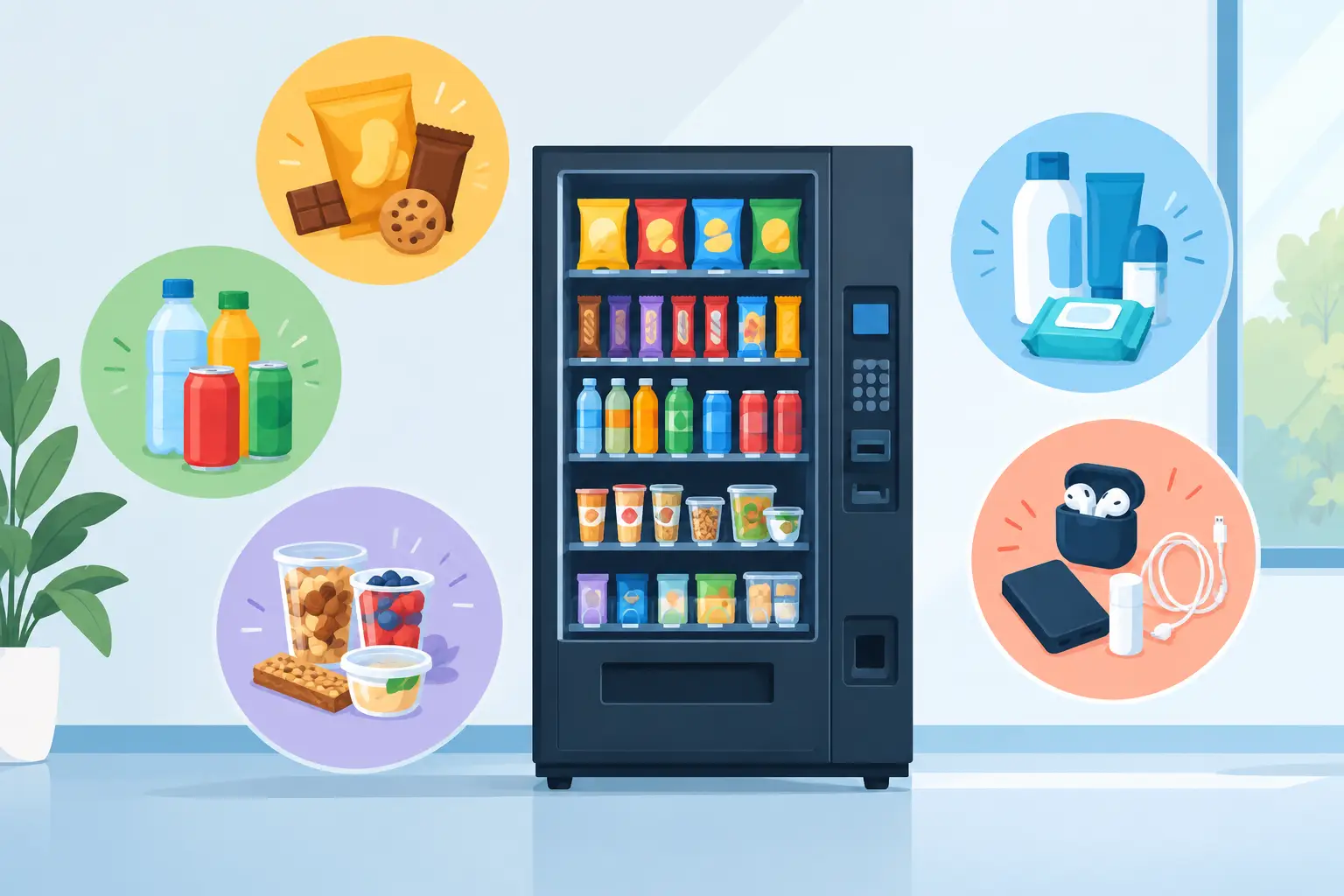
A vending machine can be full and still underperform if it carries the wrong mix. The most profitable vending product categories are not simply the items with the highest shelf price. They are products that match the people using the location, move consistently, fit the machine correctly, and leave enough margin after wholesale cost, card fees, spoilage, and service trips.
For a new operator, the goal is not to stock every possible item. It is to choose a reliable product category, place the right machine, and use sales data to improve the selection over time. For an established route, category expansion can help raise revenue without adding another stop to the schedule.
Start With the Location, Not the Product
A busy office, apartment building, laundromat, bowling center, and auto shop may all have enough traffic for vending, but they do not produce the same buying behavior. Office employees may want energy drinks, sparkling water, protein snacks, and lighter lunch options. A laundromat often supports bottled drinks, chips, candy, detergent, fabric softener, and small convenience items. A bowling center may generate stronger demand for traditional snacks, soda, sports drinks, and family-friendly treats.
Before choosing inventory, ask three practical questions: Who uses the location? How long do they stay? What can they not easily buy nearby? The best answer is often a familiar category offered at the right time and at a convenient price.
Machine format matters just as much. A narrow snack machine may be a sensible starting point for a small breakroom, while a snack-and-drink combo machine can make more sense where space is limited and customers expect variety. Larger locations may justify separate beverage and snack machines, giving you more capacity and better product flexibility.
Beverage Categories Often Drive Repeat Sales
Cold beverages are among the strongest vending categories because they solve an immediate need. Customers are more likely to buy a drink several times a week than a novelty item once a month. The category also works across a wide range of commercial locations.
Water, soda, and sports drinks
Bottled water is a dependable base item. It has broad appeal, predictable demand, and usually a long shelf life. Soda remains a high-volume choice in many locations, particularly breakrooms, recreation centers, and public-facing venues. Sports drinks can perform especially well in gyms, warehouses, transportation hubs, and active workplaces.
The trade-off is that beverage machines need enough capacity to reduce restocking frequency. Heavy products also increase the labor involved in each service visit. In a high-volume location, that is usually worthwhile. In a low-traffic site, a smaller machine or combo unit can keep the initial equipment cost and inventory commitment under control.
Energy drinks, coffee drinks, and premium beverages
Energy drinks can produce strong dollar sales because customers often accept a higher price point. Ready-to-drink coffee, iced tea, flavored water, and sparkling water can also improve a beverage lineup, especially in offices and apartment communities where customers want alternatives to standard soda.
These products should be tested rather than assumed. A premium beverage that sells two units a week may occupy space that could hold a faster-moving water or energy drink. Start with a few selections, monitor sales, and expand only when the location proves demand.
Snack Categories With Consistent Demand
Snacks remain a core profit center because they are easy to store, simple to rotate, and suitable for nearly every vending environment. The strongest snack machines balance familiar impulse purchases with a limited number of higher-value or better-for-you options.
Chips, cookies, crackers, candy, pastries, and nuts are dependable staples. Their sales are often driven by convenience, not brand loyalty alone. A customer on a short break is likely to choose what looks familiar and is available immediately.
Higher-margin specialty snacks can raise average purchase value, but they should not replace the proven basics too quickly. Protein bars, jerky, trail mix, popcorn, and baked snack options may perform well in offices, fitness-focused workplaces, and health-conscious communities. In a warehouse or late-night facility, filling and familiar snacks may matter more than a broad wellness assortment.
Pay attention to package size and coil compatibility. A product that does not vend reliably creates refunds, frustrated customers, and unnecessary service calls. When adding a new item, test several vends before loading an entire column.
Fresh Food Can Raise Revenue, With More Operational Work
Fresh sandwiches, wraps, salads, yogurt, cheese snacks, and refrigerated meals can create a higher-ticket vending program. They are particularly useful in hospitals, large offices, manufacturing sites, campuses, and locations where workers have limited food options during long shifts.
Fresh food is not automatically more profitable. It requires dependable refrigeration, tighter inventory control, expiration-date checks, and frequent servicing. Waste can erase the higher margin quickly if traffic is inconsistent. Operators should only add fresh products when the location has enough repeat demand and the service schedule can support it.
A practical middle ground is refrigerated packaged snacks and drinks. Products such as protein shakes, yogurt, cheese-and-cracker packs, and cold brew can add variety without creating the same level of spoilage risk as prepared meals.
Specialty Products Can Win the Right Location
Specialty vending is where product selection becomes closely tied to the placement opportunity. These categories can face less direct competition than snacks and drinks, but location fit is everything.
Laundry supplies are a clear example. A laundromat customer who needs detergent, fabric softener, or dryer sheets has an immediate need and limited patience for leaving the building. Small personal-care items, phone chargers, earphones, and basic convenience products can also work in apartment communities, transit-oriented locations, hotels, and entertainment venues.
Tobacco-related retail environments, bowling centers, and other niche venues may support specialized machine formats and product assortments. Operators should always verify local regulations, age-verification requirements, location policies, and product restrictions before committing to an inventory category.
The advantage of specialty products is often stronger pricing power. The risk is slower turns if the placement does not create repeat need. A specialized machine should solve a visible problem for the customer, not just add another thing to buy.
Cashless Payments Change What Can Sell
Card readers and mobile payment options do more than make a machine easier to use. They can support a broader product mix, including premium drinks, larger snacks, and higher-priced convenience items. Customers are less likely to carry cash, and a cash-only machine can lose sales even in a strong location.
For operators expanding a fleet, payment functionality should be part of the equipment decision from the start. A reliable machine with cashless capability can make it easier to test price points and understand what customers actually choose. Sales reports also help identify slow-moving items before they become expired inventory.
Smart coolers and AI-powered unattended retail systems can be a fit for locations that want a more open, retail-style experience. They may support a wider variety of products than traditional spiral vending, but they require a higher equipment investment and should be placed where traffic and product demand justify that cost.
Build a Product Mix That Protects Your Margin
A profitable machine usually has a mix of dependable sellers and measured experiments. Use the reliable products to create steady cash flow, then dedicate a smaller portion of capacity to new flavors, healthier options, premium beverages, or location-specific items.
Track unit sales, not just total revenue. A high-priced product may look attractive until you see that it sells slowly and ties up inventory. Likewise, a lower-priced snack can be a strong performer if it turns quickly and is easy to replenish. Consider wholesale cost, selling price, vending reliability, spoilage risk, and the time required to service the machine.
For first-time operators, a used or entry-level machine can be a practical way to prove a product mix before investing in a larger fleet. For growing routes, new card-reader-ready equipment and specialty formats can support locations with more specific needs. VendingMachinesForSale.net offers conventional, specialty, and smart machine options so operators can match equipment capacity to the products they plan to sell.
Keep Testing After the Machine Is Placed
The first product lineup is a starting point, not a final answer. Review sales after the first few weeks, then replace weak selections with products that better match the location. Keep proven sellers in stock, especially during busy hours or seasonal demand spikes.
The right category is the one that earns repeat sales with manageable service work. When your machine, location, payment setup, and product mix support each other, vending becomes easier to scale one profitable placement at a time.