

Vending Machine Route Expansion That Pays Off

A route can look busy on paper and still drain cash. The difference is not how many machines you own. It is whether each new placement earns enough to cover equipment, inventory, service time, commissions, and the miles between stops. Smart vending machine route expansion starts with better locations and a machine setup that fits the buying habits at each one.
For a first-time operator, expansion may mean adding a second or third location after proving the model works. For an established operator, it may mean replacing low-performing placements, entering a new territory, or adding cashless and smart retail equipment to raise sales per stop. In every case, growth should make the route denser, more dependable, and easier to service.
Start With Location Quality, Not Machine Quantity
A machine is an asset, but the location creates the sales opportunity. Before buying equipment, assess how many people regularly use the site, when they are present, what they can buy nearby, and whether the building has a reliable contact who supports the program.
An office with 80 employees on staggered schedules may produce less volume than a 40-person manufacturing shop with limited break options. An apartment building can be a strong placement when it has consistent resident traffic and no convenient store within walking distance. A laundromat may support drinks, snacks, laundry products, and specialty items because customers spend time waiting on-site.
Ask direct questions during the location review. How many people are in the building each day? Are there night shifts? Is there a cafeteria, convenience store, or food delivery alternative? Where will the machine sit, and is it visible? Can the location provide a dedicated electrical outlet and reasonable access for delivery and service?
The best prospect is not always the largest building. It is the location where customers have a frequent need to buy and limited alternatives. That is where a well-stocked machine becomes part of the routine.
Build a Route Before You Buy for It
One of the costliest mistakes in vending is purchasing a machine because the price looks attractive, then trying to force it into an unsuitable location. Match the equipment to the opportunity first.
A beverage machine may be the right choice for a warehouse, gym, auto shop, or outdoor waiting area where cold drinks are the main demand. A snack-and-drink combo unit can be a practical fit for smaller offices, salons, and apartment common areas because it provides variety with one footprint. Larger break rooms may justify separate snack and beverage machines, especially when employee counts support higher capacity.
Specialty locations need a more specific approach. Laundromats can benefit from machines that carry detergent, dryer sheets, drinks, and snacks. Bowling centers may need bottled beverages, sports drinks, candy, and quick-serve snack options. Tobacco retail and other age-restricted categories require the right equipment and local compliance planning before installation.
Smart coolers and AI-enabled retail formats can make sense in premium offices, multifamily properties, hospitals, campuses, and other high-traffic environments where shoppers expect more choice. They can carry a broader product mix than a conventional machine, but they also require a placement that can support the investment and operating model.
Choose New, Used, or Technology-Forward Equipment
Equipment condition affects your startup cost, maintenance risk, appearance, and payment options. There is no universal best choice. The right decision depends on the location’s expected sales and your available capital.
Used vending machines can lower the cost of entering a proven location. They are often a practical option for operators who can inspect condition, understand basic repairs, and want to preserve cash for inventory and route development. A lower purchase price can improve payback time, but older equipment may have limited capacity, dated components, or fewer options for modern payment hardware.
New machines generally offer a cleaner presentation, current configurations, warranty coverage, and easier integration with cashless payment systems. They are often the better fit for professional offices, newer apartment communities, and locations where appearance matters. The trade-off is higher upfront cost.
Card-reader-ready equipment should be a serious consideration for almost every expansion plan. Cash sales still exist, but many customers expect to tap, swipe, or use a mobile wallet. A location with good foot traffic can underperform simply because buyers do not carry cash. Cashless capability can raise convenience, but it also brings processing fees and connectivity requirements that should be included in your projections.
VendingMachinesForSale.net offers conventional, used, specialty, and smart vending equipment so operators can choose based on placement needs rather than forcing every location into the same machine type.
Use Simple Numbers to Screen New Stops
You do not need a complicated spreadsheet to avoid a weak placement. Estimate expected weekly sales, then subtract the direct costs associated with serving that location. Include product cost, location commission if applicable, card processing, fuel, labor, repairs, and a reserve for machine maintenance.
For example, a location producing $250 in weekly sales may sound promising. If product cost is 45 percent, the location receives a 10 percent commission, card fees apply to most transactions, and the stop adds a long drive to your route, the remaining profit may be thin. The same $250 in sales can be far more attractive when the machine is five minutes from three existing accounts.
Pay attention to sales per service visit, not just sales per machine. A machine that requires frequent refills, has a high spoilage rate, or sits far from the rest of the route can consume more time than it earns. In contrast, a moderate-volume location in a tight service area may be a better long-term asset.
Set a minimum standard before you place equipment. It may be a target weekly sales number, a maximum drive time, or a projected payback period. Your standard can change as your route grows, but having one prevents emotional decisions based on a promising conversation or a verbal commitment.
Expand Density Before Territory
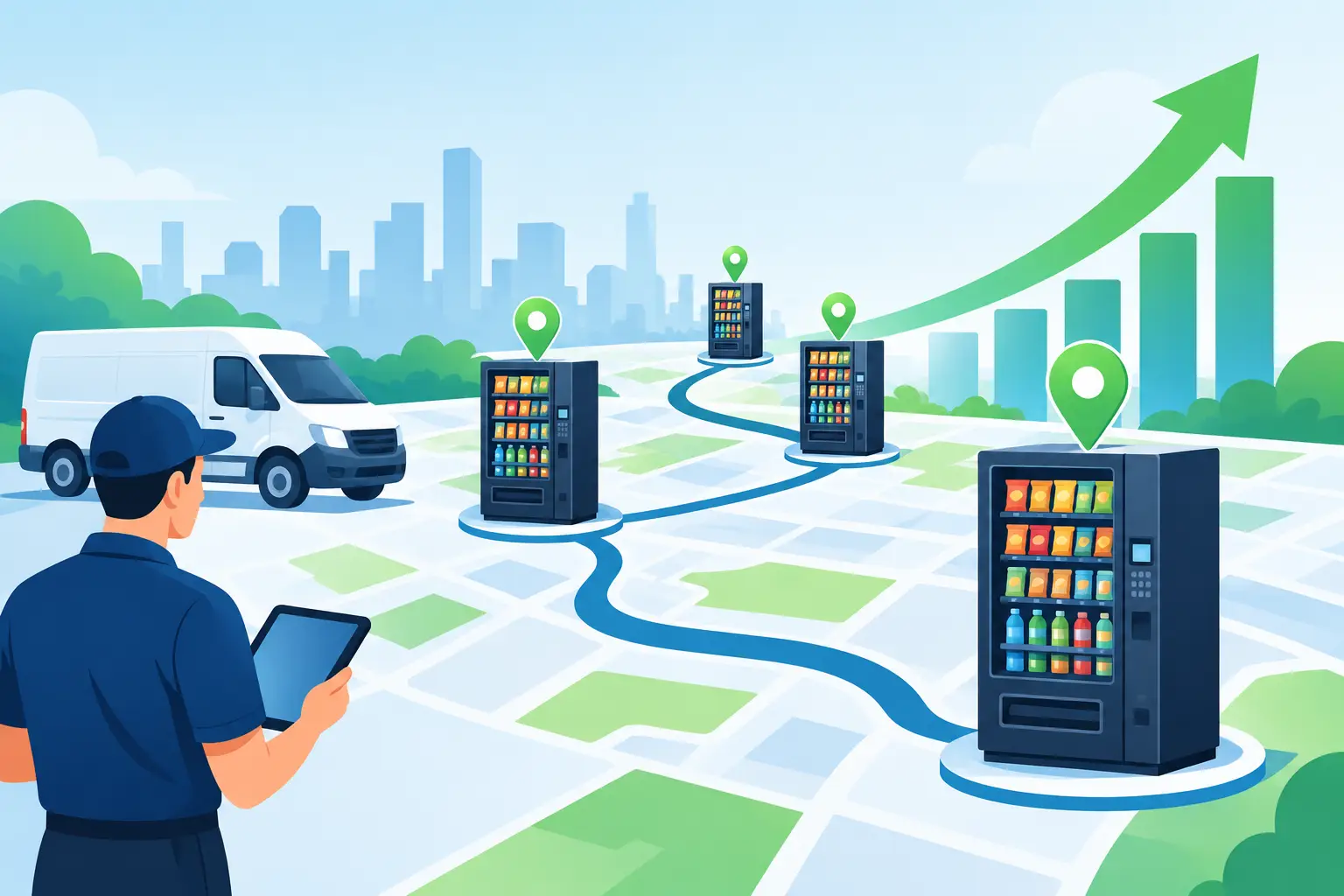
A route with machines spread across a wide metro area often looks larger than it is. Operators spend more time driving, have less flexibility for service calls, and lose money when a single machine needs attention. Density is what turns a collection of machines into an efficient route.
Look for clusters. If you already service a business park, seek nearby offices, warehouses, medical buildings, and service centers. If you have a successful laundromat placement, look for additional laundromats or complementary neighborhood businesses within the same service area. A new machine should ideally shorten the cost of serving the route, not stretch it.
There are exceptions. A high-volume location can justify extra travel, particularly if it has predictable traffic and room for multiple machines. But a remote account should earn its place with clear volume, not optimism. Review remote locations periodically and be willing to relocate equipment when performance does not support the drive.
Stock for the Location, Then Let Sales Decide
Route expansion becomes more profitable when inventory is based on actual buying behavior instead of personal preference. A blue-collar workplace may move energy drinks, bottled water, salty snacks, and substantial food items. A medical office may favor lighter snacks, water, coffee beverages, and better-for-you selections. A college-adjacent location may have faster demand for energy products and mobile-payment convenience.
Begin with a balanced product mix, then track what sells. Keep proven best-sellers in the most visible slots and remove products that sit too long. Do not overstock slow items just to create variety. Expired inventory and repeated out-of-stocks both reduce profit, just in different ways.
Seasonality matters too. Cold beverages may rise in warm months, while certain snack categories can shift with work schedules, school calendars, or local events. The operator who adjusts product mix early usually keeps sales steadier than the operator who services every machine the same way.
Protect the Route With Clear Operating Controls
As the route grows, small gaps become expensive. Keep records for machine serial numbers, placement agreements, commissions, service history, cash collections, card sales, inventory purchases, and repair costs. You should be able to see which locations are growing, which are declining, and which machines consume too much maintenance.
Use written placement terms whenever possible. Clarify who provides electricity, where the machine will sit, whether a commission is paid, who to contact for access, and how either party can end the arrangement. A clear agreement helps prevent misunderstandings when building management changes or a location requests removal.
It also helps to set service expectations honestly. A high-volume break room may need frequent visits. A small apartment location may only need periodic restocking. Promising more service than the economics support creates avoidable pressure on a growing route.
Know When to Add the Next Machine
The right time to expand is usually when current machines are producing predictable sales, service routines are under control, and you have enough working capital for equipment plus inventory. Do not use every dollar on the machine itself. New placements may take time to reach stable sales, and unexpected repairs or delivery needs can arise.
If your existing locations are consistently out of popular products, have strong card sales, or have asked for more selection, adding capacity may be smarter than chasing a distant new account. A second machine at a proven location can sometimes outperform several untested placements.
Treat every new machine as a business case. Put it where customer demand is clear, choose equipment that matches the site, and make sure the stop strengthens the route around it. That discipline gives vending machine route expansion a better chance of producing lasting income instead of just adding more work.