

Best Vending Machines for Apartment Buildings

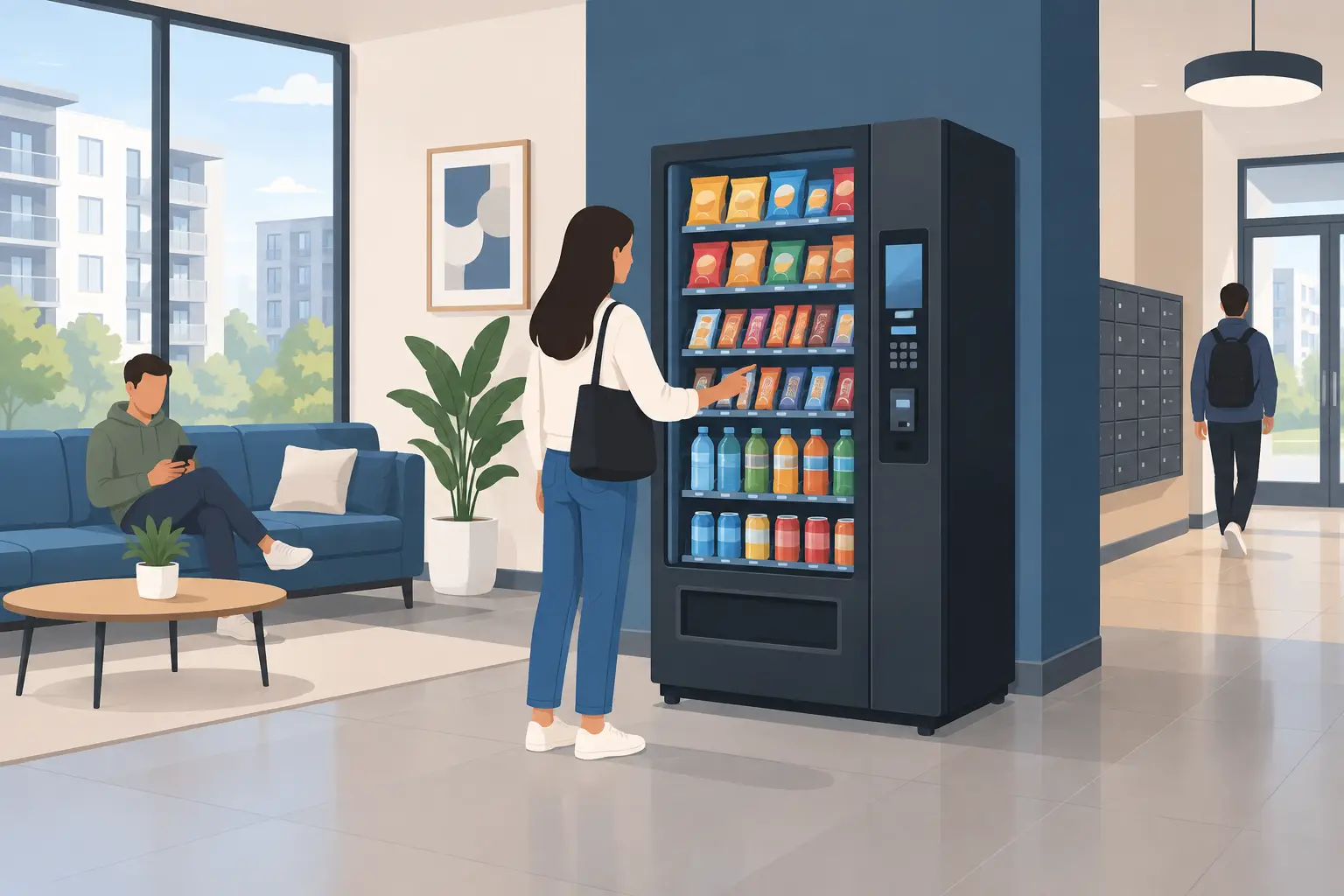
A resident gets home at 9:30 p.m., realizes they are out of water, snacks, or detergent, and does not want to drive to a store. That is the placement opportunity behind the best vending machines for apartment buildings. A well-matched machine gives residents convenient access to everyday products while giving an operator or property owner a practical unattended retail asset.
Apartment vending is not a one-size-fits-all business. A 40-unit building with a laundry room needs a different setup than a 300-unit luxury complex with a fitness center, package room, and 24-hour common areas. The right machine depends on traffic, resident demographics, available space, payment expectations, and who will handle service and restocking.
What Makes an Apartment Vending Location Work
Apartment buildings can produce consistent sales because the customer base lives on-site. Residents may use a machine at night, during bad weather, while waiting for laundry, or when they need a small item immediately. Unlike a traditional office location, demand is not limited to business hours.
Still, placement matters more than the number of units alone. A machine placed in a locked maintenance room will not perform like one near the lobby, laundry area, mailroom, clubhouse, fitness center, or parking entrance. The best locations combine visibility with a reason for residents to pause nearby.
Before buying equipment, ask the property manager where the machine can be placed, whether electrical power is available, how deliveries and installation will work, and whether the building allows exterior-facing or common-area signage. Confirm who approves product selections and whether the property expects a commission. These details affect both startup cost and long-term profitability.
Best Vending Machines for Apartment Buildings by Use Case
For most properties, snack-and-drink combo machines are the strongest starting point. They offer broad product variety in one footprint, keep the initial equipment purchase simpler, and make sense where resident traffic is moderate. A combo unit can carry bottled water, soda, energy drinks, chips, candy, cookies, protein bars, and a few better-for-you options.
Snack-and-Drink Combo Machines
A combo machine is usually the best choice for buildings with roughly 50 to 150 units, especially when there is only one practical placement area. Instead of splitting sales across separate snack and beverage machines, one unit lets an operator test demand without committing to a larger equipment footprint.
The trade-off is capacity. Beverage columns take up room, so a combo unit may need more frequent service than separate full-size machines in a high-traffic complex. It is a smart entry point for a first apartment location, but it may become too small when the building has several hundred residents or a busy shared amenity space.
Full-Size Beverage and Snack Machines
Separate beverage and snack machines are often the better fit for larger communities, properties with active clubhouses, or locations near laundromats and fitness centers. A dedicated beverage machine provides more drink capacity and more flexible bottle and can selections. A separate snack machine gives you room for larger snacks, meal replacements, candy, and specialty items.
This setup costs more upfront and requires more floor space, but it can support higher sales volume and reduce out-of-stock issues. If resident traffic is proven and the property has a visible common area, two machines can be a better business decision than forcing all products into a combo machine.
Smart Coolers and AI-Powered Smart Stores
Premium apartment communities may be a strong fit for smart coolers or AI-powered smart store formats. These systems give residents access to refrigerated drinks, fresh food, energy products, and higher-value convenience items through a modern self-service experience.
A smart cooler works best where customers are likely to buy more than a single snack. Think upscale apartment lobbies, large mixed-use complexes, student housing, or properties with extended amenity hours. It can support a stronger product mix, including sandwiches, salads, yogurt, cold brew, sports drinks, and ready-to-eat meals.
The trade-off is higher acquisition cost and greater attention to product rotation, refrigeration, and inventory controls. Fresh food can increase sales, but it also creates tighter service requirements. For operators starting a vending business, a conventional cashless combo machine is often easier to manage until route volume is established.
Specialty Machines for Laundry Areas
Apartment laundry rooms create a separate product opportunity. Residents may need detergent, dryer sheets, stain remover, laundry bags, or small household essentials at the exact moment they are doing laundry. A specialty machine can perform well in a busy laundry area, particularly in older buildings or communities without in-unit washers and dryers.
Do not assume laundry products should replace snacks and drinks. In many locations, the strongest approach is a compact snack-and-drink machine nearby, plus a specialty machine or dedicated product section for laundry items. Track movement closely. Detergent may sell steadily, but beverages and snacks often produce faster turns.
Cashless Payment Is a Must for Most Properties
Apartment residents expect to pay by card, mobile wallet, or tap-to-pay. A cash-only machine limits the customer base and can create unnecessary collection work. For most new placements, card-reader-enabled vending equipment should be the minimum standard.
Cashless payments also make it easier to price products appropriately. You can offer water, energy drinks, better-for-you snacks, and premium convenience items without relying on residents to carry exact bills or coins. Remote reporting can help identify slow-moving products, stockouts, sales by machine, and peak purchasing times.
Cash acceptance can still make sense in some markets, but it should be an added option rather than the machine’s only payment method. When evaluating equipment, confirm that the machine can support the payment technology your route needs.
Choose Capacity Based on Service Frequency
The most profitable machine is not always the largest one. Capacity should match how often you can realistically visit the property. A smaller combo machine may be ideal if the building is close to your existing route and can be serviced twice a week. A larger machine makes more sense when the location is farther away or has enough volume to justify a fuller load.
Overbuying capacity can tie up cash in equipment and inventory. Underbuying creates frequent stockouts, extra service trips, and frustrated residents. Start with realistic sales expectations rather than choosing based only on a machine’s appearance or price.
For a new location, plan product capacity around your first 30 to 60 days of service. Watch which items sell, how quickly beverage selections empty, and whether residents respond to premium products. Then adjust the planogram instead of guessing.
New vs. Used Machines for Apartment Locations
New vending machines offer updated payment compatibility, modern styling, manufacturer support, and fewer early repair concerns. They are often the right choice for property owners seeking a polished amenity or operators building a cashless route from the ground up.
Used machines can lower startup costs substantially and may be a practical option for an operator testing a smaller property. The key is condition. Verify refrigeration performance for beverage equipment, bill validator and coin mechanism operation, product delivery, machine dimensions, and compatibility with card readers before purchasing.
A low purchase price does not help if a machine requires repeated repairs or cannot accept the payments residents prefer. Compare the total cost of ownership, including equipment price, delivery, setup, payment hardware, repairs, inventory, and service time. VendingMachinesForSale.net offers equipment across new, used, conventional, and smart vending categories, making it easier to compare options against the needs of a specific building.
Build the Product Mix Around Resident Demand
Apartment vending sells convenience first. Water, soda, energy drinks, chips, candy, cookies, crackers, and protein bars are dependable starting categories. From there, product selection should reflect the property.
A fitness-focused community may support protein shakes, zero-sugar drinks, trail mix, and protein snacks. Student housing may produce stronger sales for energy drinks, ramen cups, candy, and late-night snacks. A family-oriented property may need juice, crackers, granola bars, and household basics. Luxury properties may respond better to sparkling water, cold coffee, premium snacks, and fresh refrigerated options.
Avoid filling every selection with niche products on day one. Use proven items as the base, reserve a few selections for testing, and rotate slow sellers quickly. Residents notice empty spirals and stale inventory more than they notice a large menu.
A Practical Buying Checklist
Before placing an order, confirm these five points:
- The machine fits through the building entrance, elevator, hallway, and final placement area.
- Electrical requirements match the available outlet, with a dedicated outlet preferred for refrigerated equipment.
- The machine accepts card and mobile payments or can be equipped to do so.
- Capacity matches projected traffic and your planned service schedule.
- The product mix matches the building’s residents and the machine’s temperature capabilities.
A vending machine in an apartment building should solve a real convenience problem, not simply occupy an empty corner. Start with the machine format that fits the property today, keep payment options current, and let actual sales guide the next machine you add.