

Vending Machine Electricity Cost: What to Budget

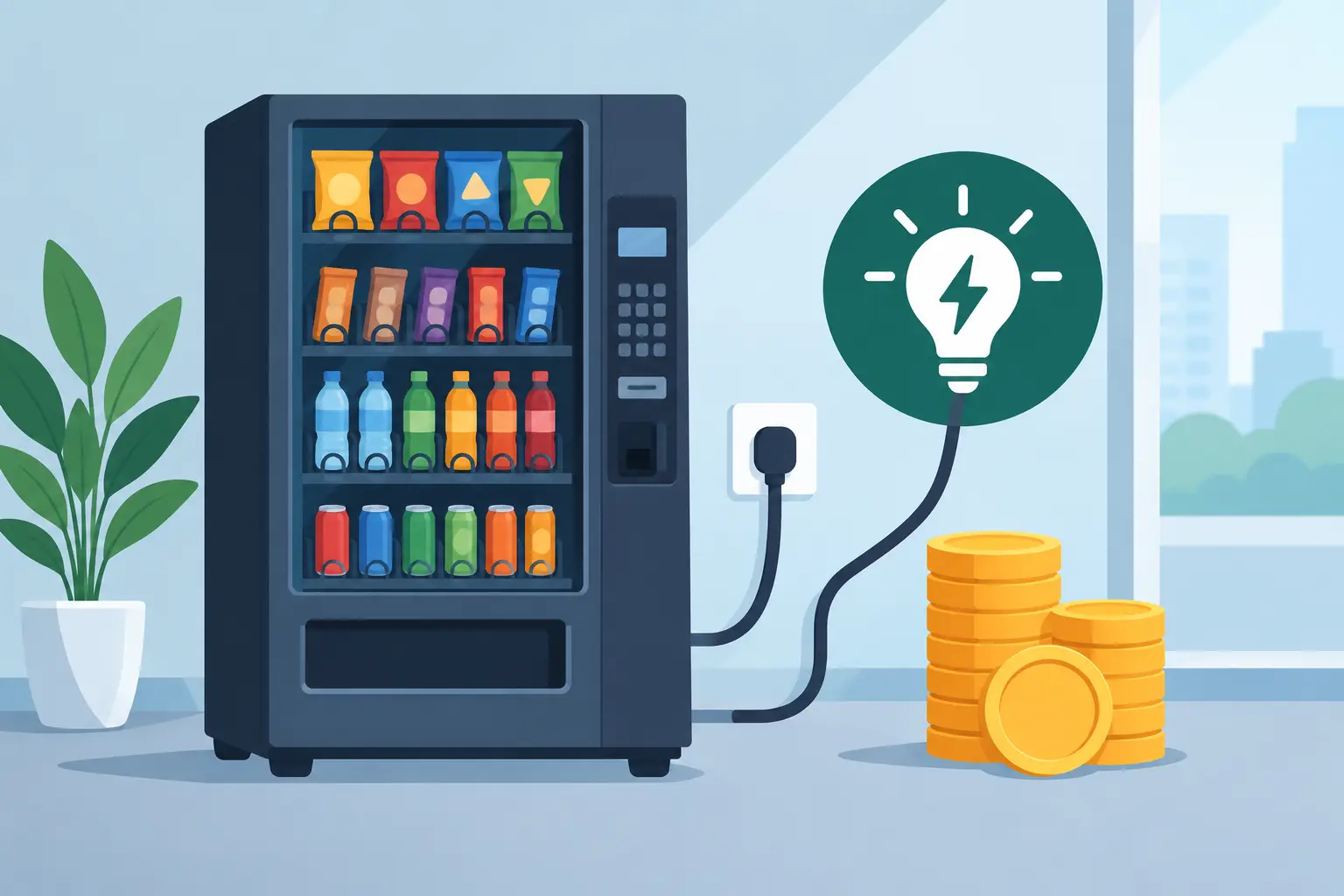
A vending machine can earn around the clock, but refrigerated products also require around-the-clock power. Your vending machine electricity cost is usually a manageable operating expense, not a reason to avoid a good location. Still, it belongs in the numbers before you buy a machine, set prices, or agree to a commission with a location owner.
For most operators, the monthly power bill for one standard machine is modest compared with product cost, card processing fees, and route service. The real variable is not simply whether a machine has a plug. It is the machine type, the local utility rate, the temperature around the machine, how often customers open it, and whether the equipment is operating efficiently.
What Does a Vending Machine Cost to Run?
Electricity is billed in kilowatt-hours, commonly written as kWh. Your local rate might be close to $0.12 per kWh in one market and above $0.25 per kWh in another. That difference changes the economics more than many new operators expect.
Use this simple calculation to estimate monthly electricity expense:
Average kW used x 24 hours x 30 days x local cost per kWh = monthly electricity cost
For example, assume a refrigerated beverage machine averages 0.35 kW over a full day and the location pays $0.16 per kWh. The estimate is 0.35 x 24 x 30 x $0.16, or about $40 per month.
That does not mean every drink machine will cost exactly $40. A newer efficient model in a climate-controlled office could run below that figure. An older machine in a hot warehouse, laundromat, or outdoor-adjacent placement may run higher because the compressor works harder to hold product temperature.
A practical planning range for many commercial machines is roughly $15 to $75 per month per unit. Ambient snack machines are often toward the low end. Refrigerated beverage machines, combo machines, fresh-food equipment, and smart coolers can be higher. Treat this as a budgeting range, then confirm it with the equipment specifications and the location’s power rate.
Vending Machine Electricity Cost by Machine Type
Snack machines
A standard snack machine with shelf lighting, a bill validator, and a card reader generally uses less energy than a refrigerated unit. Its motors run only during a vend, while the payment system and electronics draw relatively low standby power.
However, not every snack machine is fully ambient. A unit with a refrigerated lower section, a chilled candy area, brighter lighting, or always-on display components will use more. When comparing used and new equipment, check whether the machine is truly non-refrigerated rather than assuming every snack machine has the same power needs.
Beverage machines
Cold drink machines tend to be one of the larger electricity users on a route. They must maintain a chilled cabinet, recover temperature after the door is opened during service, and often operate in warm, high-traffic environments.
A beverage machine can still be a strong asset because packaged drinks often sell consistently in offices, apartment buildings, gyms, warehouses, and bowling centers. The point is to account for energy in the product margin. If the machine costs $45 per month in power and sells 300 drinks per month, the electricity allocation is about $0.15 per vend.
Snack-and-drink combo machines
Combo machines are popular with first-time operators because one footprint can serve two product categories. Their electricity use depends on the refrigerated section, cabinet size, lighting, and cooling design. In many cases, a combo unit uses more power than an ambient snack machine but may use less than operating separate full-size snack and beverage machines.
The trade-off is capacity. A high-volume location may need dedicated machines, while a smaller office or waiting area may get better results from one combo machine with a manageable power draw and a lower initial equipment investment.
Smart coolers and AI-powered retail
Smart coolers and unattended retail systems provide a different sales model. They can use refrigeration, cameras, sensors, displays, network hardware, and electronic access controls. That can increase energy use compared with a basic snack machine, but it may also support a broader mix of fresh food, drinks, and premium products.
For this format, evaluate electricity alongside sales per square foot, shrink control, payment experience, and product mix. A higher utility expense may be worthwhile when the location supports higher ticket sizes and stronger daily traffic.
What Makes Power Consumption Go Up?
The equipment label is a starting point, not a guarantee of real-world use. A vending machine draws power differently in a 72-degree office than it does in a 95-degree service corridor.
Heat is the biggest factor for refrigerated equipment. Direct sunlight, poor air circulation, a machine pushed tightly against a wall, and placement near dryers or cooking equipment all make the cooling system work longer. Laundromats can be excellent vending locations, for example, but their warmth and humidity should be considered when estimating operating costs.
Machine condition matters too. Dirty condenser coils, worn door seals, failing fans, and older refrigeration components can raise consumption while creating product-temperature risk. Used machines can be a smart way to start a vending business or expand a route at a lower purchase price, but operators should inspect refrigeration performance and service history carefully.
Product loading also plays a role. Every restock opens the door and introduces warmer air. Frequent service is usually a good sign because sales are moving, but it can create short-term recovery demand. Keep service visits efficient and avoid leaving the door open while organizing cases of product.
Who Pays for Electricity at the Location?
In many traditional placement agreements, the location provides electricity as part of hosting the machine. The operator pays for the equipment, inventory, maintenance, payment processing, insurance, and route labor. In return, the business gains a convenient amenity for employees, residents, or customers.
Some locations may ask about anticipated electrical use before approving placement. Come prepared with a realistic range instead of promising that the machine uses almost nothing. Explain the machine type, confirm the required outlet, and show that you have considered safe commercial placement and ongoing maintenance.
A location owner may request a monthly utility contribution, a higher commission, or a specific placement arrangement for energy-intensive equipment. That is not automatically a bad deal. Compare the request against projected sales. Paying $30 per month for a highly productive location can be better than getting free power in a building where the machine barely sells.
How to Reduce Electricity Costs Without Hurting Sales
The best savings often come from selecting the right machine and location from the beginning. A machine that is too large for the account can consume more power and hold slow-moving inventory. A machine that is too small can create stockouts and force unnecessary service trips.
Start with the product mix. Use an ambient snack machine where chilled products are not likely to sell. Use a beverage machine or combo unit where cold drinks are part of the revenue opportunity. Match capacity to traffic rather than purchasing based only on the lowest equipment price.
For refrigerated machines, maintain airflow around the cabinet and keep vents clear. Clean condenser areas on the schedule recommended for the machine. Check door gaskets, make sure the machine is level, and address abnormal compressor cycling quickly. A small maintenance issue can become a larger utility and repair expense if it is ignored.
Energy-management settings can help on compatible equipment. Some machines can reduce lighting or adjust cooling behavior during low-traffic hours while protecting product quality. Do not use settings that allow food or beverages to fall outside safe temperature requirements. Product safety and customer experience come first.
When possible, choose an indoor, climate-controlled location. A convenient outlet in a hot loading area may look easy at first, but a cooler placement can reduce stress on the machine and support better reliability over time.
Build Electricity Into Your Route Profit Plan
Electricity should be tracked as a per-machine operating line, even when the host location covers it. Knowing the estimated vending machine electricity cost helps you evaluate equipment choices, negotiate confidently, and understand the value your machine brings to a site.
For a simple route budget, spread the estimated monthly power cost across expected sales. If a refrigerated machine uses $50 of electricity per month and produces 500 vends, the utility allocation is $0.10 per transaction. Add that figure to cost of goods, card fees, commissions, delivery labor, and a maintenance reserve before deciding whether the account meets your margin target.
This approach also helps when comparing a lower-cost used machine with a newer, more efficient model. The used unit may deliver faster payback if it is reliable and well suited to the location. A new machine may justify its higher price through warranty coverage, cashless functionality, energy efficiency, and fewer service calls. There is no single right answer without looking at expected sales and the condition of the equipment.
Before placing your next machine, ask for the utility rate, verify the outlet and available clearance, and estimate power expense from the actual machine specifications. A location that can support dependable sales will usually matter far more than a few dollars of monthly electricity, but knowing that number keeps every buying decision grounded in profit.