

Vending Machines for Sale for Your Business

A vending machine can be a practical income-producing asset, but only when it fits the location, customer traffic, and products people actually want to buy. The right vending machines for sale can help you start a first route, replace an unreliable unit, or add a new revenue stream to an established operation. The wrong one can tie up cash in a machine that is oversized, under-equipped, or poorly matched to its placement.
Before comparing prices, start with the business opportunity in front of you. A breakroom, apartment lobby, laundromat, bowling center, retail store, and fitness center all call for different equipment decisions. Capacity matters. Payment options matter. So does whether you need a conventional machine, a specialty unit, or a smart retail format.
Vending Machines for Sale Start With the Location
The location should drive the machine choice, not the other way around. A small office with 20 employees may not generate enough sales for a high-capacity machine with every available feature. A busy apartment complex or manufacturing facility may need a dependable beverage machine and snack machine with enough selections to reduce restocking trips.
Think about who will use the machine, when they will buy, and what they are likely to purchase. Day-shift workers often want cold drinks, energy drinks, coffee, snacks, and quick meals. Laundromat customers may spend longer at the location and buy beverages, snacks, laundry supplies, or small convenience items. A bowling center can support drinks, candy, chips, and family-friendly products during peak evening and weekend traffic.
Physical conditions also matter. Measure the available space, including doorways, hallways, elevator access, and the final placement area. Confirm the electrical outlet location and determine whether the machine will be indoors, in a protected area, or exposed to temperature changes. A machine that cannot be delivered or serviced easily creates an expensive problem before it ever makes a sale.
Choose the Machine Type That Matches Demand
Commercial vending equipment comes in several core formats. Each serves a different product mix and operating model.
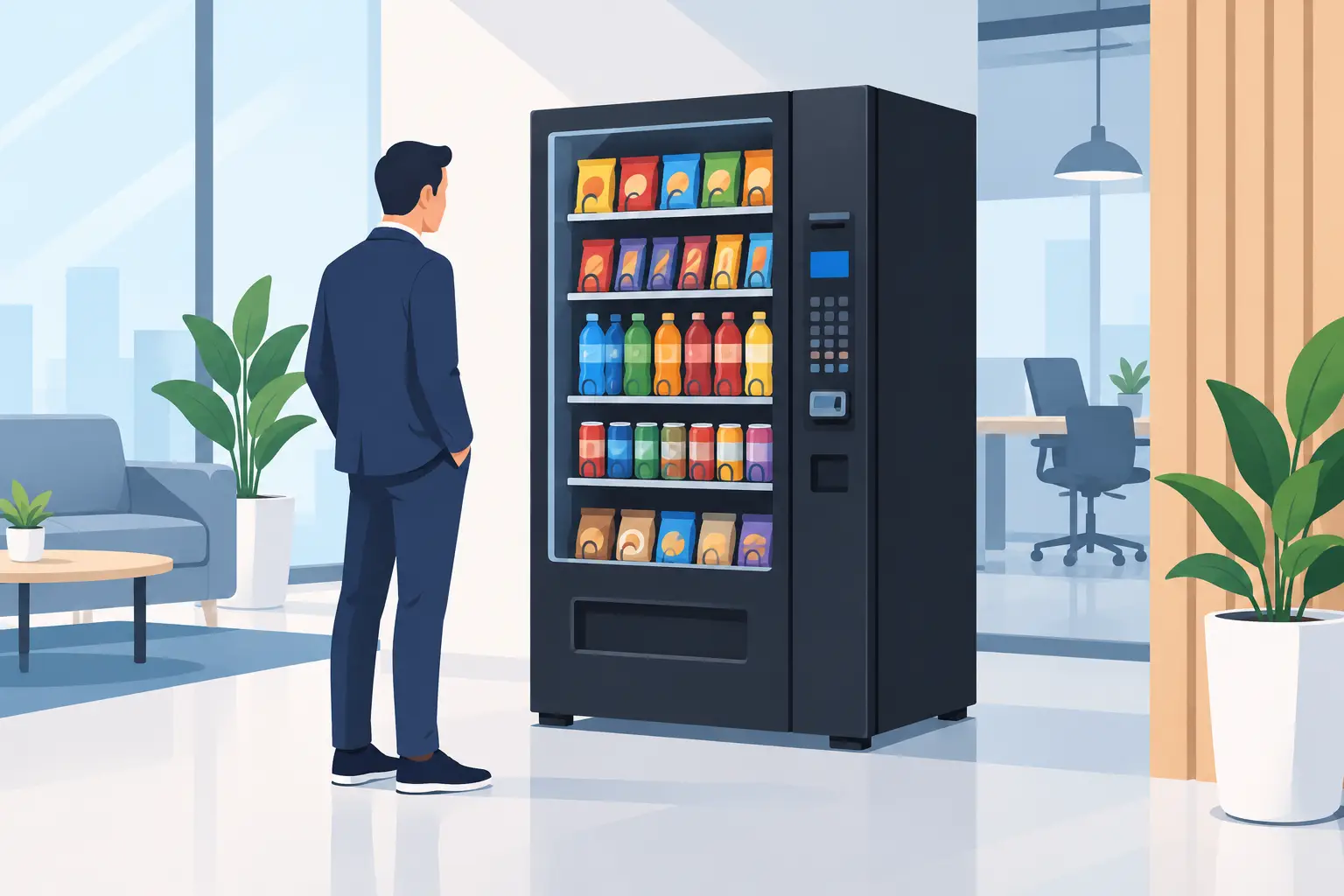
A beverage machine is often a strong choice for high-traffic locations because cold drinks are repeat purchases. Look at bottle and can capacity, cooling performance, product selection flexibility, and whether the machine supports modern payment hardware. In locations with strong energy drink, water, and soda demand, beverage vending can produce steady turns.
Snack machines work well in offices, schools where permitted, apartment buildings, waiting areas, and recreation venues. They are designed for chips, candy, pastries, cookies, nuts, protein bars, and similar packaged products. Adjustable trays are especially useful when your inventory may change by location or season.
Snack-and-drink combo machines combine two categories in one footprint. They can be a smart entry point for new operators, smaller locations, and placements where there is not enough traffic or floor space for separate machines. The trade-off is capacity. A combo unit may require more frequent service than two dedicated machines in a busy location, and it may limit the number of beverage or snack selections you can offer.
Specialty machines can create a better fit for a specific venue. Laundry supply vending, tobacco retail equipment, bulk vending, frozen food, and other category-specific formats can meet needs that a standard snack machine cannot. These machines are most effective when the products solve an immediate customer need at the point of purchase.
Smart stores and AI-powered coolers are another option for operators serving premium offices, residential properties, hospitals, and retail environments. Rather than selecting products through a traditional glass-front machine, customers can access a cooler or unattended store format and pay for what they take. These systems can offer a wider product range and a more modern buying experience, but they require a location with the right customer base, connectivity, and sales potential.
New vs. Used Equipment: Make the Numbers Work
Used equipment can lower the cost of starting a vending business. For a buyer with limited capital, an entry-level used machine may make it possible to test a location, build sales history, and reinvest revenue into expansion. The key is understanding condition, compatible payment upgrades, parts availability, and any work required before placement.
A used machine is not automatically the lowest-cost option over time. An older unit that needs frequent repairs, has inefficient cooling, or cannot accept a card reader may cost more in missed sales and service calls than its purchase price suggests. Ask practical questions: Does it cool properly? Are the motors, bill validator, coin mechanism, and control board operating as expected? Can the machine be configured for the products you plan to sell?
New vending machines generally provide updated components, cleaner presentation, current payment compatibility, and a more predictable starting point for your route. They can make particular sense for high-visibility locations, property managers who expect newer equipment, or operators expanding into cashless retail. The higher upfront investment may be justified when the location is proven and expected sales support it.
There is no universal answer. A first-time operator may choose a quality used machine for a smaller account, while an established route owner may choose new cashless equipment for a high-volume location. The right decision is the one that leaves enough working capital for inventory, card processing, delivery, insurance, repairs, and restocking.
Payment Options Are a Sales Decision
Cash acceptance still matters in some locations, but card and mobile payments are no longer optional for many vending businesses. Customers often arrive without cash, especially in offices, gyms, apartment buildings, and public-facing commercial spaces. If they cannot pay the way they prefer, the sale is lost.
When comparing machines, confirm whether a card reader is already installed, whether the equipment is card-reader-ready, and what upgrades are required. Cashless systems may support credit and debit cards, mobile wallets, and remote sales reporting. That reporting can help you identify which products sell, spot low inventory, and adjust pricing based on real activity instead of guesswork.
Payment technology adds cost, including hardware, connectivity, and transaction fees. Still, a machine that accepts more payment types can produce enough additional sales to justify the investment. This is particularly true in locations where people make frequent low-dollar purchases and expect tap-to-pay convenience.
Compare Capacity, Product Flexibility, and Service Needs
A machine with more capacity is not always better. Larger machines hold more inventory and reduce restocking frequency, but they cost more, require more space, and may leave slow-moving products sitting too long. Smaller machines are easier to place in compact areas but can run empty quickly in a successful location.
Look beyond the total number of selections. Consider shelf configuration, product sizes, adjustable spirals or trays, and whether the machine can accommodate your most profitable products. A beverage machine that only fits narrow cans may not work if your location prefers large energy drinks, sports drinks, or bottled water. A snack machine with limited flexibility can make it harder to test healthier options, premium snacks, or larger packaged items.
Serviceability should also be part of the comparison. Reliable machines are easier to operate profitably when parts are available, components are familiar to technicians, and basic tasks such as loading, cleaning, price changes, and refunds are manageable. As your fleet grows, operational simplicity becomes more valuable because small service delays multiply across multiple locations.
Build a Purchase Around Your First 90 Days
The machine purchase is only the beginning. Plan for product inventory, placement approvals, delivery access, insurance, payment setup, taxes, and a realistic restocking schedule. Keep cash available for the first round of adjustments, because product mix and pricing usually need refinement after customers begin buying.
Start with products that match the location, then use sales data and customer requests to improve the selection. An office may respond to sparkling water and protein snacks, while a bowling center may move more soda, candy, and shareable snacks. Avoid filling every slot with personal favorites. The machine should reflect customer demand, not operator preference.
VendingMachinesForSale.net gives buyers a way to compare conventional, used, specialty, cashless, and AI-enabled equipment in one place, making it easier to choose equipment based on the opportunity rather than a one-size-fits-all recommendation. The best purchase is not necessarily the cheapest machine or the most advanced one. It is the machine that fits the location, accepts the payments customers use, carries products that sell, and gives your business room to grow.