

AI Retail Trends That Matter for Vending Operators

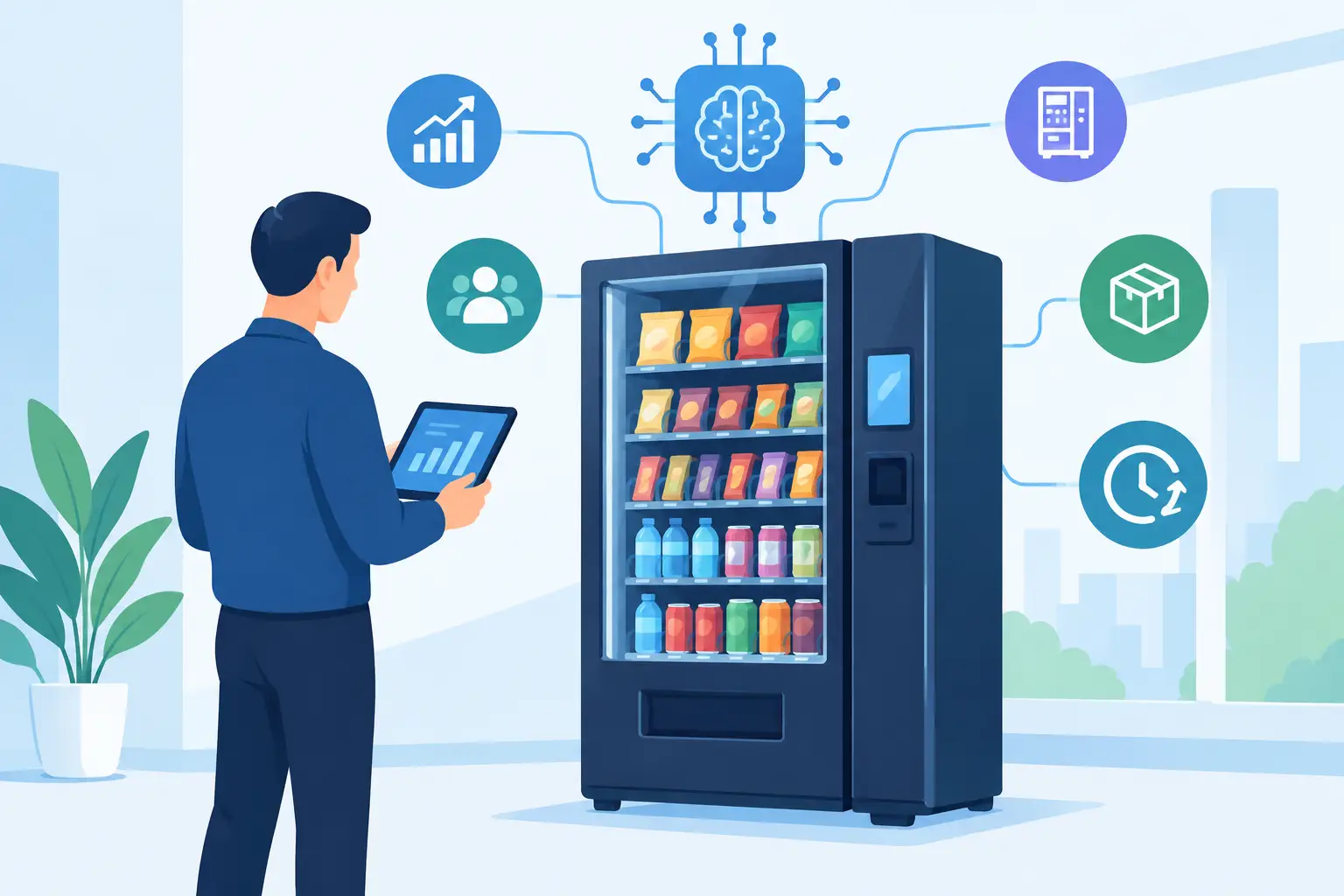
A traditional snack machine can still earn well at the right location. But AI retail trends are changing what customers expect when they walk into an office break room, apartment lobby, gym, or hospital waiting area. They expect card and mobile payment, a quick purchase, fresh product choices, and fewer out-of-stock slots. For vending operators, AI is less about chasing a buzzword and more about running a location with better visibility and a format that fits how people shop.
The opportunity is real, but not every location needs an AI-powered machine. A dependable conventional vending machine with a card reader may be the best investment for a price-sensitive route. A smart cooler or unattended smart store can make more sense where product variety, premium items, and a modern customer experience can support the higher equipment cost. The right choice starts with the location, not the technology.
AI Retail Trends Shaping Unattended Sales
The biggest change in unattended retail is the shift from a fixed product slot to a more flexible shopping experience. In a standard vending machine, an item must sit in a specific coil, and the machine dispenses it after payment. That model is proven, easy to understand, and efficient for packaged snacks, drinks, and common impulse purchases.
AI-enabled retail equipment works differently. Smart coolers and smart stores can use cameras, sensors, weight detection, or computer vision to identify the products a customer takes. The customer typically unlocks the unit with a card or mobile payment method, selects items, closes the door, and is charged for what was removed. This makes it possible to sell products that are difficult to vend through coils, including fresh food, salads, protein drinks, larger bottles, bakery items, and locally sourced products.
That flexibility is one reason smart retail is gaining ground in higher-traffic and higher-income locations. It can turn a limited break-room offering into a compact convenience store without the labor and lease cost of a staffed counter.
Cashless payment is now the starting point
Card readers were once an upgrade. For many placements, cashless payment is now the baseline. Employees, students, travelers, and gym members often do not carry cash, and a machine that only accepts bills and coins can lose sales even when the product mix is strong.
AI-powered equipment almost always relies on cashless access, but the same payment expectation applies to traditional beverage, snack, and combo machines. When comparing equipment, operators should confirm which payment hardware is included, whether it supports tap-to-pay and mobile wallets, and what ongoing processing or connectivity costs apply. A lower purchase price can be less attractive if the machine cannot meet how customers want to pay.
Better data can improve route decisions
Another major trend is using sales data to make practical operating decisions. Connected vending equipment can show which products sell, when sales happen, and where stock-outs occur. AI-equipped coolers can add more detailed inventory visibility, depending on the system.
That information matters because vending profit is usually built through small improvements repeated across a route. If a beverage machine sells energy drinks every afternoon but water sits too long, the next service visit can reflect that demand. If a location has strong lunch traffic but weak evening sales, fresh food inventory can be adjusted before waste becomes a problem.
Data does not replace operator judgment. A new tenant, seasonal shift, special event schedule, or workplace policy can change demand quickly. But it gives operators a stronger basis for deciding what to stock, how often to visit, and whether a location deserves a larger machine or a different format.
Where Smart Coolers Make the Most Sense
A smart cooler is not simply a newer version of a drink machine. It is a different retail format with different strengths. It works best when customers want selection beyond packaged chips and bottled soda, and when the location has enough traffic to support inventory turnover.
Office campuses, apartment buildings, hospitals, hotels, fitness centers, colleges, and transportation-related sites can be strong candidates. These environments often have customers who value convenience and may purchase premium beverages, ready-to-eat meals, healthy snacks, or refrigerated products. A smart cooler can display those products more naturally than a spiral machine.
The trade-off is that fresh and premium inventory needs closer attention. Operators must manage dates, replenishment, refrigeration, shrink risk, and product presentation. A smart cooler with too little traffic can create unnecessary food waste and tie up capital. Before buying, estimate not only daily sales but also how quickly refrigerated inventory can turn.
Traditional vending can still be the better fit for laundromats, smaller warehouses, service shops, and locations with predictable demand for familiar packaged items. A snack-and-drink combo machine may deliver a simpler operation with a lower upfront cost, particularly for a first route.
How AI Changes Product Mix
AI retail technology allows operators to think beyond what physically fits in a vending column. That creates room for a more location-specific product strategy.
At a gym, the mix may center on protein drinks, electrolyte beverages, bars, and better-for-you snacks. In an apartment building, residents may respond to meal options, ice cream, household essentials, and late-night snack choices. At a bowling center, bottled drinks, candy, salty snacks, and family-size items may move fastest. The machine should match the setting, not a generic product plan.
More assortment is not automatically better. A cooler stocked with 40 slow-moving products can be harder to service than a smaller selection of proven sellers. Start with a focused mix, review sales, and add variety where customers demonstrate demand. This approach protects cash flow while still giving the location a more modern offering.
What Buyers Should Compare Before Investing
The best equipment decision is usually a balance of acquisition cost, operating requirements, and earning potential. New AI retail systems can offer advanced features and a strong customer experience, while used conventional machines may help a new operator launch with less capital.
When comparing machines, look beyond the headline price. Consider these operating factors:
- Placement fit: Measure the available footprint, doorway access, power requirements, and whether refrigeration is needed.
- Capacity and product flexibility: Determine whether the machine can carry the package sizes, food categories, and number of selections your location needs.
- Payment setup: Confirm card, contactless, and mobile wallet capabilities, plus recurring service fees.
- Service and connectivity: Ask how inventory data is accessed, what happens during an internet outage, and who supports technical issues.
- Condition and warranty: Used equipment can offer excellent value, but buyers should understand its condition, included components, and available support.
These details matter more than a feature list. A high-capacity machine is not a bargain if it cannot fit through the building entrance. An AI cooler is not the right upgrade if the property manager will not provide reliable connectivity or if the site has limited daily foot traffic.
A Practical Rollout for New and Growing Operators
For first-time vending business owners, the safest approach is often to build a foundation with reliable cashless equipment before adding more specialized technology. A beverage machine, snack machine, or combo unit placed in a well-qualified location can teach the fundamentals: product purchasing, service scheduling, payment reporting, customer preferences, and location communication.
Once a route has consistent sales and operating routines, AI-powered vending or smart retail can be a targeted expansion. Choose a location where the technology solves a clear problem, such as limited food access, demand for fresh choices, or a need for more inventory flexibility. Do not buy advanced equipment just because a competitor has it.
Established operators can use the same discipline when upgrading an aging fleet. Replace machines where card payment, refrigeration reliability, or selection limits are holding back sales. Test one smart format in a high-potential account, track product turns and service time, then use the results to decide whether to expand.
VendingMachinesForSale.net offers conventional, specialty, used, and AI-enabled equipment because a profitable route rarely relies on one machine type. The strongest fleet is usually a mix of dependable machines matched to the needs of each location.
AI will continue to make unattended retail more flexible, measurable, and customer-friendly. The operators who benefit most will not be the ones who buy every new feature. They will be the ones who choose reliable machines, place them where demand is proven, and use better data to keep each location earning.