

Vending Machine Accessories That Protect Profits

A vending machine can be in the right location and still leave money on the table. The difference often comes down to the vending machine accessories that make buying easier, keep products organized, reduce service calls, and protect the equipment after hours. For a new operator, the right upgrades can make an entry-level machine more competitive. For an established route, they can help extend the working life of machines already earning revenue.
The best accessory package depends on the machine, the location, and what you sell. A card reader may be essential in an office building but less urgent at a cash-heavy laundromat. Extra product trays can create more variety in a busy apartment complex, while stronger security hardware may matter most at an unattended public location. Start with the sales opportunity, then choose upgrades that solve a specific operating problem.
Start With Payment Accessories
Cashless payment equipment is often the first upgrade operators consider, and for good reason. Many customers expect to pay with tap, chip, mobile wallet, or card. A machine that accepts only bills and coins can lose a sale when a customer does not carry cash.
Card readers and cashless payment systems can help a conventional snack, beverage, or combo machine compete in locations where convenience drives purchases. Before buying, confirm that the machine’s controller and wiring support the payment system. Many commercial machines use MDB communication, but compatibility should never be assumed based on appearance alone.
There are trade-offs. Cashless systems usually involve cellular connectivity, payment processing fees, and recurring service costs. They also need a reliable signal at the placement location. Those costs can still make business sense when the machine serves office staff, students, gym members, or other customers who regularly use cards and mobile wallets. Review transaction volume and average sale price before deciding whether a reader will pay for itself.
Coin mechanisms and bill validators also deserve attention. A dependable bill validator reduces rejected bills, while a quality coin mechanism improves change accuracy. In some locations, upgrading aging payment components can be more cost-effective than replacing an otherwise reliable machine.
Vending Machine Accessories for Better Product Sales
Capacity is not just about fitting more products inside a machine. It is about stocking the right products in a way that customers can see, select, and receive them without frustration. Product organization accessories can directly affect sell-through and reduce wasted space.
For snack machines, spiral options, product pushers, dividers, and tray adjustments can help accommodate different package widths and heights. A standard spiral that works well for chips may not reliably vend protein bars, small candy boxes, or bagged healthier snacks. If a product hangs up or falls inconsistently, it creates customer complaints and refunds while adding another stop to the route.
Beverage machines may need bottle shims, column spacers, or can and bottle setup components that match the products being loaded. The goal is consistent vending, not simply maximum capacity. Oversized energy drinks, sparkling water bottles, and specialty beverages often require a different setup than standard 12-ounce cans.
Combo machines can benefit from careful tray configuration because they are expected to handle a broader product mix. Use the top-selling items to guide the setup. It is usually better to give reliable sellers more facings than to fill every selection with slow-moving products.
LED lighting is another practical upgrade where product visibility matters. Bright, working interior lighting makes a machine more inviting and helps customers confirm their choice before paying. This is especially useful in apartment common areas, hotel corridors, bowling centers, and locations with evening traffic. Lighting will not fix an unpopular product mix, but it can make a well-stocked machine easier to shop.
Security Upgrades That Reduce Risk
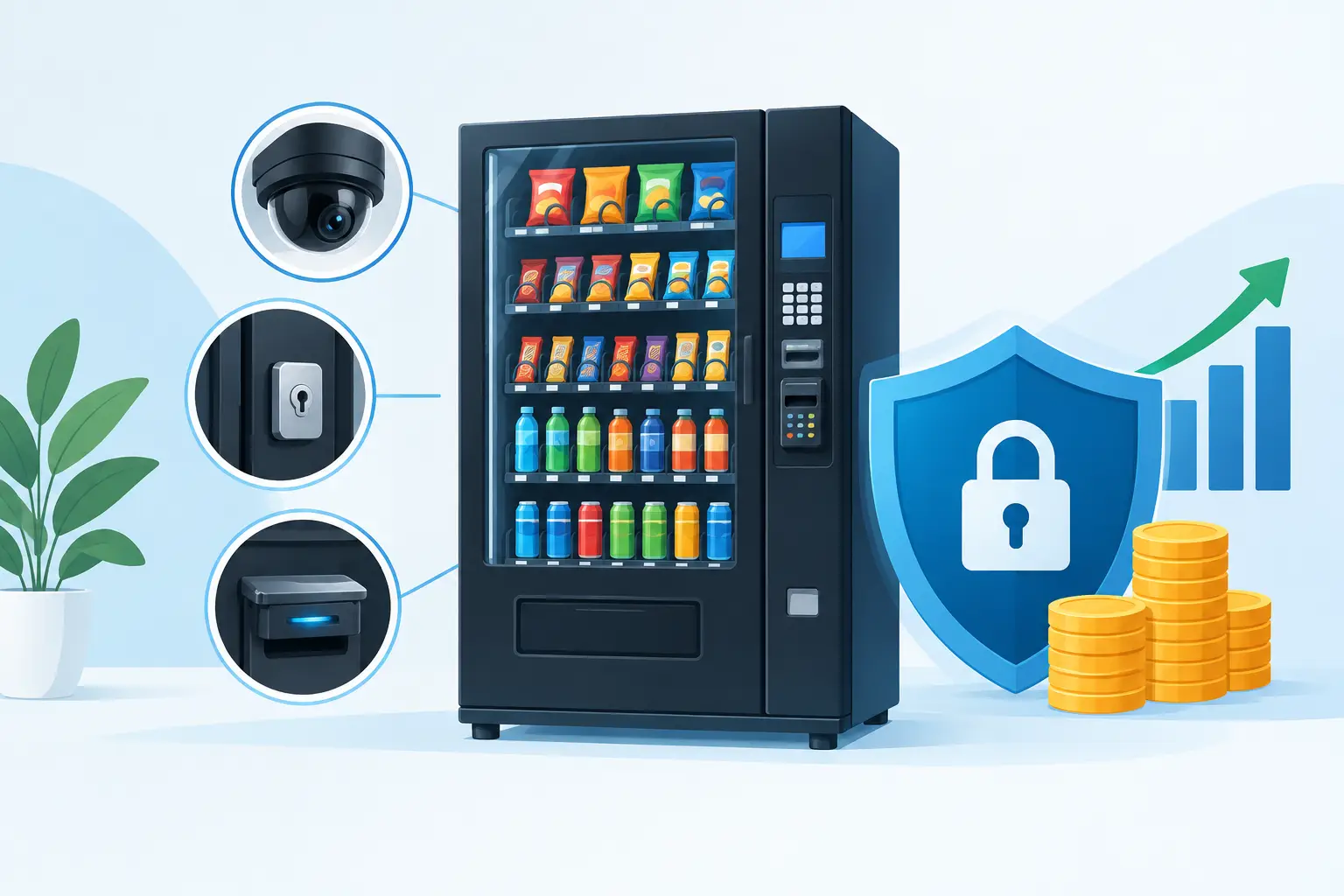
Unattended retail equipment needs protection, particularly in high-traffic or lightly supervised placements. Security accessories can include upgraded locks, lock covers, door reinforcement components, anti-pry hardware, and anchoring solutions. The appropriate level of protection depends on the setting and the machine’s exposure.
A machine in a controlled employee break room has different security needs than one placed near a public entrance. In a higher-risk location, a basic lock may not be enough. Stronger locking hardware can discourage opportunistic theft and help protect cash, inventory, and expensive payment equipment.
Anchoring is worth considering for heavy machines placed where tampering is possible. It should be planned during installation, not after a problem occurs. Confirm floor conditions, available clearance, property approval, and the machine manufacturer’s guidance before using any mounting or anchoring method.
Do not overlook simple operational security. Keep keys organized, limit who has access, and replace damaged locks promptly. An accessory only adds value when it is installed correctly and supported by consistent route procedures.
Service Parts Keep Revenue Equipment Running
Some of the most useful accessories are not customer-facing. Replacement parts and service tools help operators address common issues before a machine stays offline for days. Depending on the equipment, useful items may include replacement selection buttons, delivery sensors, vend motors, harnesses, door switches, fuses, labels, and refrigeration-related components.
New operators do not need to carry every possible part. A small, machine-specific service kit is usually a smarter starting point. Build it around the equipment on your route, the components most likely to wear, and the distance between your storage area and machine locations. As the fleet grows, keeping a few common replacement items on hand can reduce downtime and emergency shipping costs.
Remote monitoring hardware and telemetry can also change how a route is managed. When supported by the machine, monitoring can provide sales activity, inventory alerts, machine status information, and service notifications. This can reduce unnecessary visits and make restocking more targeted. The trade-off is the ongoing platform cost and the need to keep data settings, connectivity, and machine compatibility in order.
For a small route with machines close together, manual checks may still be practical. For a larger or more spread-out route, monitoring can save enough time and fuel to justify the expense.
Check Compatibility Before You Buy
The most expensive vending accessory is the one that does not fit, communicate, or function with the machine you own. Before ordering any upgrade, identify the manufacturer, model number, machine serial number, controller type, and relevant payment or refrigeration configuration. Photos of the existing component, connector, and mounting area can also prevent mistakes.
Ask whether the accessory is designed for your exact machine or whether it requires an adapter, firmware update, harness, or professional installation. This matters most with card readers, control boards, bill validators, telemetry devices, and refrigeration parts. Used machines can add another variable because prior owners may have modified wiring or replaced original components.
Installation labor should also be part of the buying decision. A lower-priced part is not necessarily the better value if installation requires multiple service visits or leaves the machine out of operation. When launching a vending business, prioritize accessories that improve sales, reliability, or security without creating a complicated maintenance burden.
Build the Accessory Plan Around the Location
Rather than adding every available upgrade, match your budget to the placement. A cashless reader and clean product display may be the priority for a modern office. A laundromat machine may need durable payment components, security protection, and a product mix built around drinks, detergent, and snacks. A bowling center may benefit from bright lighting and room for higher-margin beverages and shareable snacks.
For operators expanding their fleet, standardizing accessories across similar machines can make service easier. Common locks, payment setups, and replacement parts reduce the number of items you need to carry and simplify staff training. Standardization is not always possible when buying used equipment or serving specialized locations, but it is a worthwhile goal as the route grows.
The strongest accessory decision is the one tied to a real operating need: fewer missed sales, faster service, more reliable vending, or better equipment protection. Buy for the location you have, keep compatibility at the center of the decision, and let each upgrade earn its place in the machine.