

Vending Machine Product Comparison for Buyers

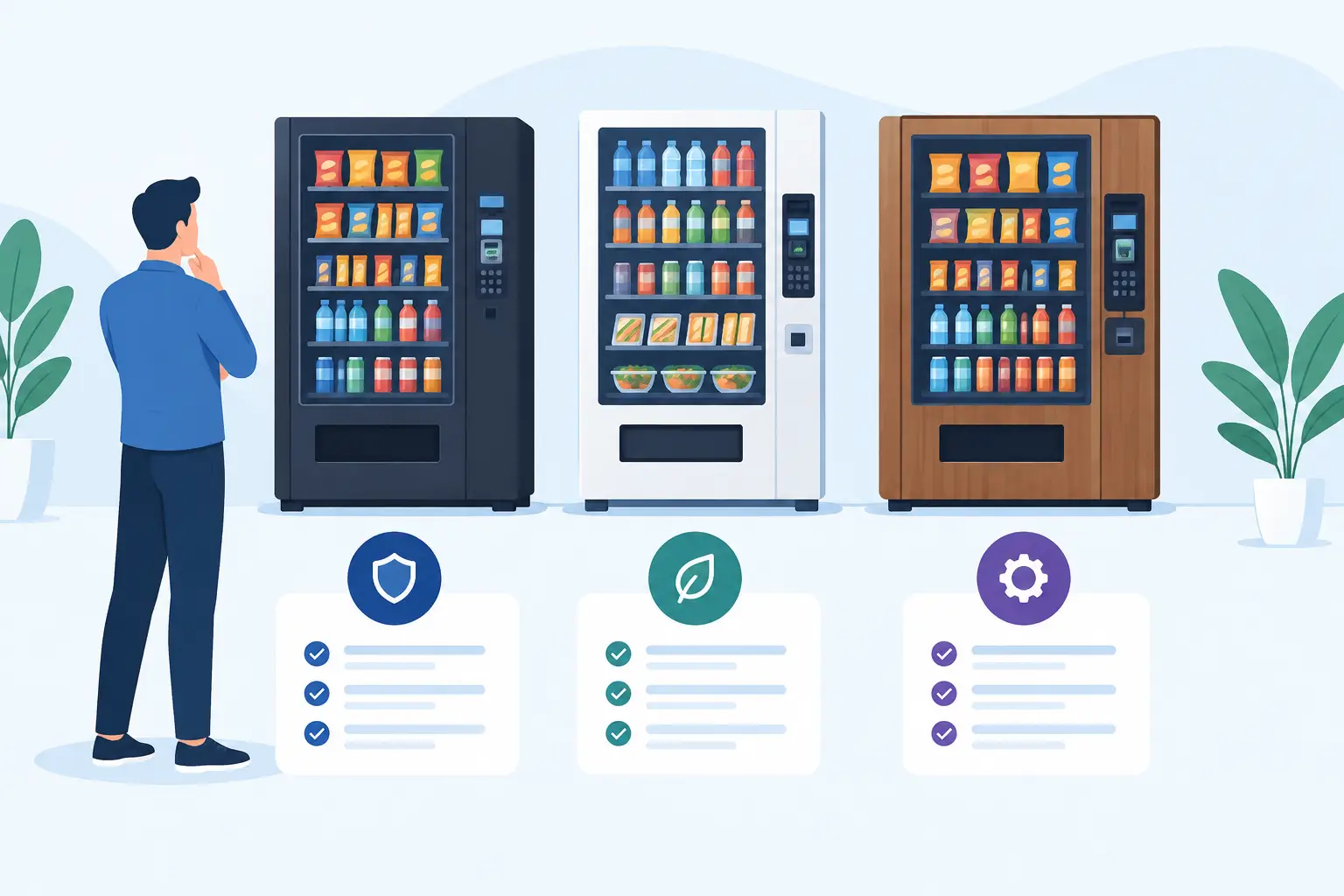
A vending machine can look like a good deal until it reaches the location and cannot carry the products, accept the payments, or handle the traffic that location requires. A useful vending machine product comparison starts with the placement opportunity, then works backward to the equipment. That approach helps first-time owners protect startup capital and helps established operators add machines that earn their place on the route.
The right choice is rarely the lowest-priced unit or the machine with the longest feature list. It is the one that fits your product mix, expected sales volume, available space, and service plan.
Start With the Location, Not the Machine
An office breakroom, apartment community, laundromat, bowling center, and retail waiting area can all support vending, but they do not need the same machine. Before comparing products, consider who will buy, when they will buy, and what they are likely to want.
A busy office may need cold beverages, snacks, and cashless payments during concentrated break periods. A laundromat may benefit from a compact snack-and-drink combo unit or a specialty machine offering laundry supplies. A bowling center can support beverages and snacks with a larger capacity because traffic often comes in waves. In a controlled retail setting, an AI-powered smart cooler or smart store may create a broader unattended retail opportunity.
Space matters just as much. Measure the installation area, doorways, hallway turns, and nearby power access before placing an order. A large beverage machine can be a strong revenue producer, but it is not useful if delivery access is tight or the location only has room for a smaller footprint.
Compare Vending Machine Categories by Sales Opportunity
The fastest way to narrow a catalog is to compare machine formats based on what they are designed to sell.
| Machine type | Best fit | Main advantage | Main trade-off | | — | — | — | — | | Beverage machine | Offices, gyms, waiting areas, high-traffic sites | High demand for cold drinks and strong bottle or can capacity | Does not cover snack sales on its own | | Snack machine | Offices, schools where permitted, breakrooms | Flexible product selection across chips, candy, bars, and healthier items | Requires product rotation to avoid stale inventory | | Snack-and-drink combo | Smaller locations, laundromats, startup routes | Covers two popular categories in one footprint | Usually offers less capacity per category than separate machines | | Specialty machine | Laundromats, tobacco retail, bowling centers, niche placements | Matches a specific location need | Demand depends heavily on the exact placement | | Smart cooler or smart store | Premium offices, residential properties, retail environments | Supports a wider product assortment and modern unattended shopping | Higher upfront cost and a greater need for a well-managed location |
A combo machine is often the practical starting point when a location has modest traffic and limited floor space. It gives customers choices without requiring two machines, and it can help a new operator test a location before committing more capital. At a high-volume site, separate snack and beverage machines may be the better long-term purchase because each machine can hold more of its best-selling category.
Specialty equipment should be compared even more carefully. A machine built for laundromat products can create sales that a conventional snack machine will miss, but it needs a location where those products solve an immediate customer need. The same rule applies to tobacco-focused or entertainment-venue equipment. A specialized machine earns through relevance, not simply through novelty.
Vending Machine Product Comparison: Capacity and Selection
Capacity is not just a specification on a product page. It determines how often you need to service the machine, how much revenue it can capture between visits, and whether it can stay stocked through busy periods.
For beverage machines, compare the total number of selections, the number of products each selection can hold, and whether the configuration works for the packages you plan to sell. Bottles, cans, energy drinks, and larger specialty beverages take up different amounts of space. A machine with many selections may still be a poor fit if it cannot hold enough of your fastest-moving products.
For snack machines, focus on the flexibility of the tray layout. Your mix may include standard chips and candy, but many locations also request protein bars, nuts, cookies, gum, pastries, or better-for-you options. Product size varies widely, so check whether the machine can be configured for the items you expect to stock.
Do not overbuy capacity simply because a larger machine looks more professional. A location with light traffic can leave you carrying too much inventory and making fewer turns on your investment. On the other hand, an undersized machine in a busy building can lose sales when popular items sell out before your next service visit. The goal is enough capacity to cover demand without tying up cash in slow-moving inventory.
New vs. Used Equipment: Compare Total Cost
Used vending machines can lower the cost of starting a vending business, especially when you are testing your first locations or adding an affordable machine to an existing route. A lower acquisition price can make the numbers work at smaller placements where a new machine would take longer to pay back.
The trade-off is condition. When comparing used units, review the machine’s stated condition, payment setup, refrigeration performance where applicable, cosmetic appearance, and whether parts or upgrades may be needed. A used machine that is clean, functional, and suited to the location can be a smart purchase. A bargain machine that needs repeated service can cost more than expected through downtime, repairs, and lost sales.
New equipment generally provides a more current presentation, modern compatibility, and a cleaner starting point for a commercial account. It can be easier to place in offices, apartments, and higher-end environments where appearance and payment convenience affect adoption. The higher upfront price should be weighed against anticipated sales, the length of the location agreement, and your available capital.
Rather than asking whether new or used is better, ask which option gives this location the best path to positive cash flow. A new card-reader-ready machine may be justified at a strong account. A dependable used unit may be the better asset for a smaller site with predictable but limited demand.
Payment Options Can Change the Sales Equation
Cashless payment functionality is one of the most practical comparison points for modern vending. Many customers expect to pay with a card, phone, or contactless wallet, especially in offices, residential buildings, gyms, and public-facing commercial locations. A machine that only accepts cash can limit the number of customers willing to buy.
When comparing equipment, confirm whether a card reader is already installed, whether the machine is card-reader compatible, and what additional setup may be required. Compatibility is not the same as being ready to take payments on day one. Build the cost of payment hardware, processing, connectivity, and any related service into your operating plan.
Cashless sales come with processing costs, so the decision is not purely about features. Still, many operators find that greater customer convenience and better purchase conversion outweigh those costs at the right locations. If the placement serves employees, students, travelers, or younger customers, cashless capability is often a priority rather than an optional upgrade.
Compare Service Needs Before You Buy
Every machine becomes part of your route. That means you are comparing more than price, capacity, and product selections. You are also comparing how easily the machine can be stocked, cleaned, repaired, moved, and monitored.
A simple conventional machine may be the right choice for an operator who wants familiar equipment and straightforward servicing. A smart cooler or AI-enabled format can support a more flexible retail assortment, but it also requires you to understand the technology, maintain the customer experience, and choose a location that supports the higher-value format.
Ask practical questions while evaluating any unit: How frequently will the site need restocking? Can you transport the machine safely? Does your route have room for another service stop? Will the machine’s size, product layout, and payment setup make sales easier or create more work? Equipment should fit the operation you can run consistently, not the operation you hope to build years from now.
VendingMachinesForSale.net brings used, new, specialty, and technology-forward options into one catalog, which makes side-by-side evaluation easier when you are comparing price points and commercial use cases. Use product details to confirm the exact configuration before purchasing, especially if payment acceptance, product capacity, or placement dimensions are decision factors.
Make the Purchase Decision Around a Simple Revenue Plan
A sound purchase decision connects equipment cost to realistic location sales. Estimate the number of transactions you expect per day, the average sale amount, product cost, payment-related expenses, location commission if applicable, and how often you will service the machine. Then compare that estimate against the machine price and expected operating costs.
You do not need perfect forecasts. You need a reasonable case for why this machine belongs at this location. If the placement is unproven, choose equipment that controls your downside. If the site already has dependable traffic and clear product demand, capacity, cashless payments, and a stronger presentation may justify a larger investment.
The best machine on paper is not always the best machine for your route. Buy the equipment that can stay stocked, stay working, and give customers the products and payment choices they expect. That is how one well-matched placement becomes a reliable foundation for expanding your fleet.