

Best Snacks for Vending Machines That Sell

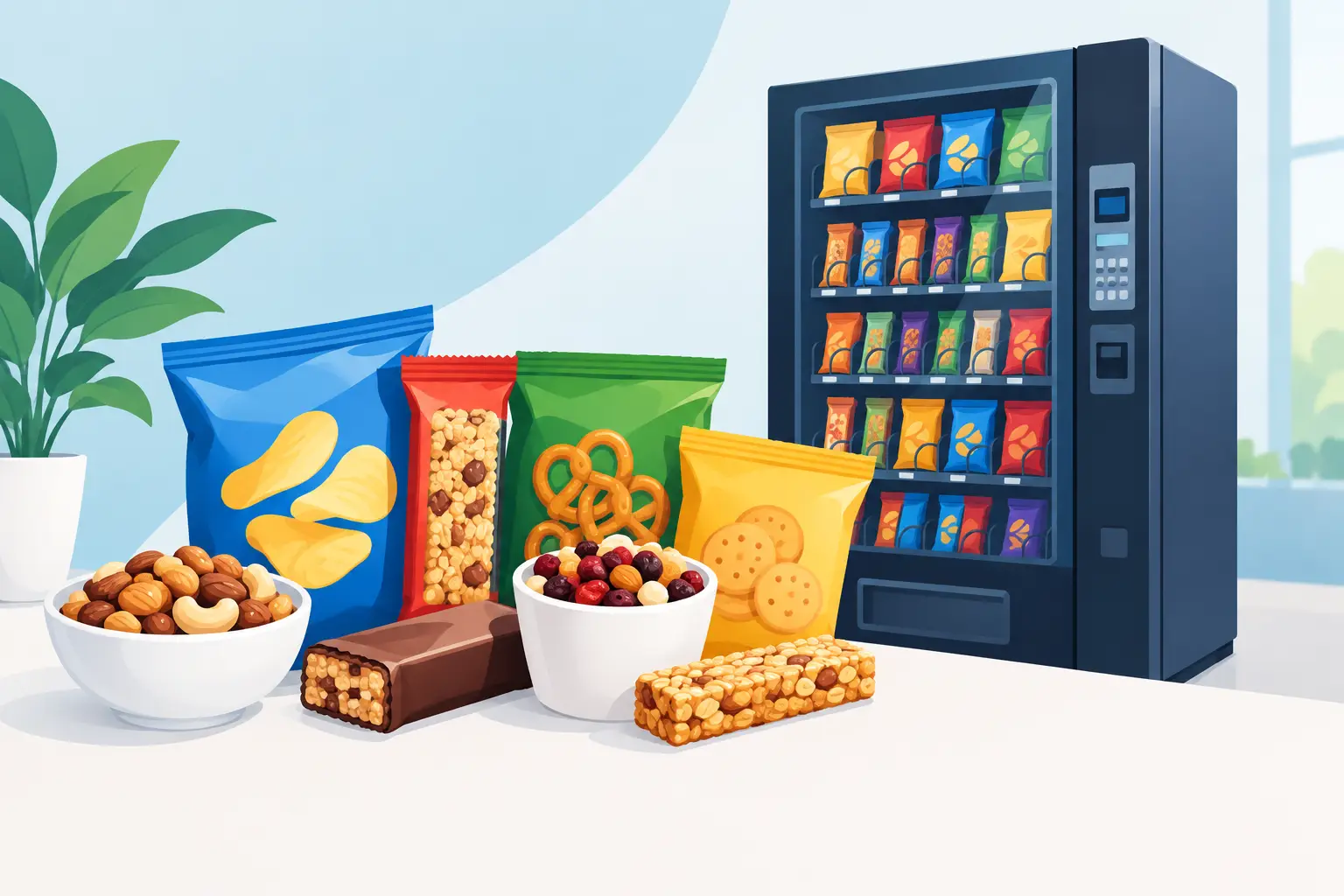
A snack machine can look fully stocked and still underperform if the product mix misses the people using it. The best snacks for vending machines are not simply the biggest brand names. They are items that fit your machine, match the location, hold up in inventory, and sell consistently at a price customers will accept.
For a first machine or an expanding route, start by thinking in terms of turns per selection. A dependable item that sells steadily is usually more valuable than a premium product that occupies a slot for weeks. Your goal is to build a snack assortment that gives customers familiar choices while leaving enough room to test location-specific demand.
What Makes a Snack Right for a Vending Machine?
The right product has to work operationally before it can work financially. It needs packaging that vends reliably, a shelf life that supports your service schedule, and a wholesale cost that leaves room for margin after card processing, commissions, and spoilage. A popular snack in a retail store is not automatically a good vending item.
Package size matters more than many new operators expect. A bag that is too wide can catch in the spiral. A light item can fall sideways or fail to drop cleanly. Products with soft chocolate coatings can create complaints in hot locations, while delicate items may arrive crushed if the machine is stocked too tightly. Check the machine’s tray configuration, coil dimensions, and product depth before buying cases.
Product recognition also matters. Customers make fast decisions at a vending machine. Familiar chips, candy, cookies, crackers, and protein bars typically need little explanation. More specialized products can earn a place, but they should prove themselves through sales data rather than take over the machine on day one.
Best Snacks for Vending Machines by Category
A balanced machine usually sells better than a machine built around one type of snack. Customers want a quick salty option, something sweet, and at least a few choices that feel lighter or more filling. The mix should be adjusted by location, but these categories give most operators a strong starting point.
- Chips and salty snacks: Potato chips, tortilla chips, cheese snacks, pretzels, popcorn, and nuts are dependable sellers in offices, break rooms, laundromats, and recreation venues. Stock recognizable flavors first, then use one or two slots for spicy, baked, or lower-calorie alternatives.
- Candy and chocolate: Chocolate bars, peanut candy, chewy candy, gum, and mints create strong impulse purchases and often carry solid margins. Keep chocolate exposure limited in machines placed near sunlight, unconditioned entrances, warehouses, or other warm areas.
- Cookies and baked snacks: Packaged cookies, snack cakes, crackers, and pastry items give customers a satisfying mid-afternoon option. These products often work especially well in office settings, apartment communities, and waiting areas, where customers may want something more substantial than a small candy bar.
- Better-for-you snacks: Protein bars, trail mix, nuts, jerky, dried fruit, granola bars, and baked chips can increase sales in gyms, medical offices, colleges, and workplaces with wellness programs. They usually cost more, so price them accordingly and avoid assuming every location will support a large healthy selection.
- Filling snacks: Peanut butter crackers, cheese crackers, meat sticks, larger bars, and mixed-nut products can serve people who missed a meal or need energy during a long shift. These items are useful in manufacturing, transportation, hospitals, and 24-hour locations.
The best starting assortment is usually familiar rather than trendy. Once the machine produces a few weeks of sales history, replace slow-moving selections with controlled tests. That approach protects cash flow and gives you a clearer picture of what each location actually wants.
Match the Product Mix to the Placement
Location should drive your decisions more than personal preference. A snack machine in a bowling center can support more candy, chips, and shareable items than a machine in a fitness center. A factory break room may need filling products at multiple price points, while a professional office may respond better to premium chips, trail mix, cookies, and smaller sweet treats.
At a laundromat, customers often stay long enough to browse and may buy snacks for children as well as themselves. In that setting, recognizable candy, cookies, chips, crackers, and small drink-friendly items can move well. At a school-adjacent or youth-focused location, follow all local rules and placement policies while emphasizing popular, appropriately sized packaged snacks.
For medical, corporate, or wellness-oriented accounts, do not remove conventional snacks completely unless the location requests it. A machine stocked only with protein bars and low-calorie products can leave sales behind. A practical compromise is to reserve roughly a quarter to a third of visible selections for better-for-you items, then adjust based on actual demand.
Build Prices Around Margin, Not Guesswork
A low selling price does not always produce the best return. If an item costs more, requires frequent replenishment, or has higher spoilage risk, it needs a price that supports the work involved. At the same time, customers compare vending prices with nearby convenience stores, cafeterias, and break-room alternatives.
Use a mix of price points. Entry-level choices give value-focused customers an easy purchase, while premium bars, nuts, jerky, and larger snacks can command more. The key is to make the pricing feel logical. A basic snack should not sit beside a similar-looking product at a sharply higher price without a clear reason, such as size, ingredients, or brand position.
Card and mobile payments can also affect the snack mix. Cashless customers are often more willing to buy a higher-priced item or add a drink when the transaction is quick. If you are purchasing equipment for a new route, card-reader-ready machines and snack-and-drink combo units can help you capture those higher-value purchases where the location supports them.
Use Your Machine Layout as a Sales Tool
Not every selection earns the same attention. Put your most reliable sellers in easy-to-see rows, and give bulky or awkward packages a position that lets them vend cleanly. Avoid overloading one coil just because a product is popular. A product that jams or hangs up turns a good seller into a refund request.
Keep a few selections open for testing. You might rotate in a different chip flavor, an energy bar, a regional snack, or a premium cookie pack. Test one variable at a time when possible. If you change six products at once, you will not know what improved or hurt the machine’s performance.
For routes with more than one machine, do not force the same planogram everywhere. Standardizing core products simplifies purchasing, but each account has its own buying habits. A route becomes more profitable when you keep the operational benefits of a repeatable base mix while allowing each location to earn its own assortment.
Control Waste and Service Time
Slow inventory ties up money and increases the chance of expired products. Check dates when receiving cases, use first-in, first-out rotation, and avoid buying deep quantities of unproven items just to obtain a lower case price. A modest wholesale discount is not a win if half the product sits unsold.
Your service schedule should influence what you stock. A high-traffic plant can support fast-selling chips and fresh baked snacks because you visit often. A lower-volume office may be better served by products with longer dates, such as crackers, nuts, candy, jerky, and shelf-stable bars. The right snacks are the ones you can keep available without creating excess labor or waste.
Track sales by selection whenever your equipment or payment system allows it. If a product repeatedly sells out, add facings or move it into a more visible slot. If a selection has not moved after a reasonable trial period, replace it. This simple discipline is how operators turn a stocked machine into a managed retail asset.
When you are starting a vending business or expanding your fleet, choose reliable snack equipment that can accommodate the package sizes and payment options your location requires. VendingMachinesForSale.net offers machine formats for standard snack sales, combined snack-and-drink placements, and technology-forward unattended retail setups. Then let the location tell you what to stock. The most profitable snack assortment is built one sales report, one refill, and one smart product swap at a time.