

Do New Versus Used Vending Machines Pay Off?

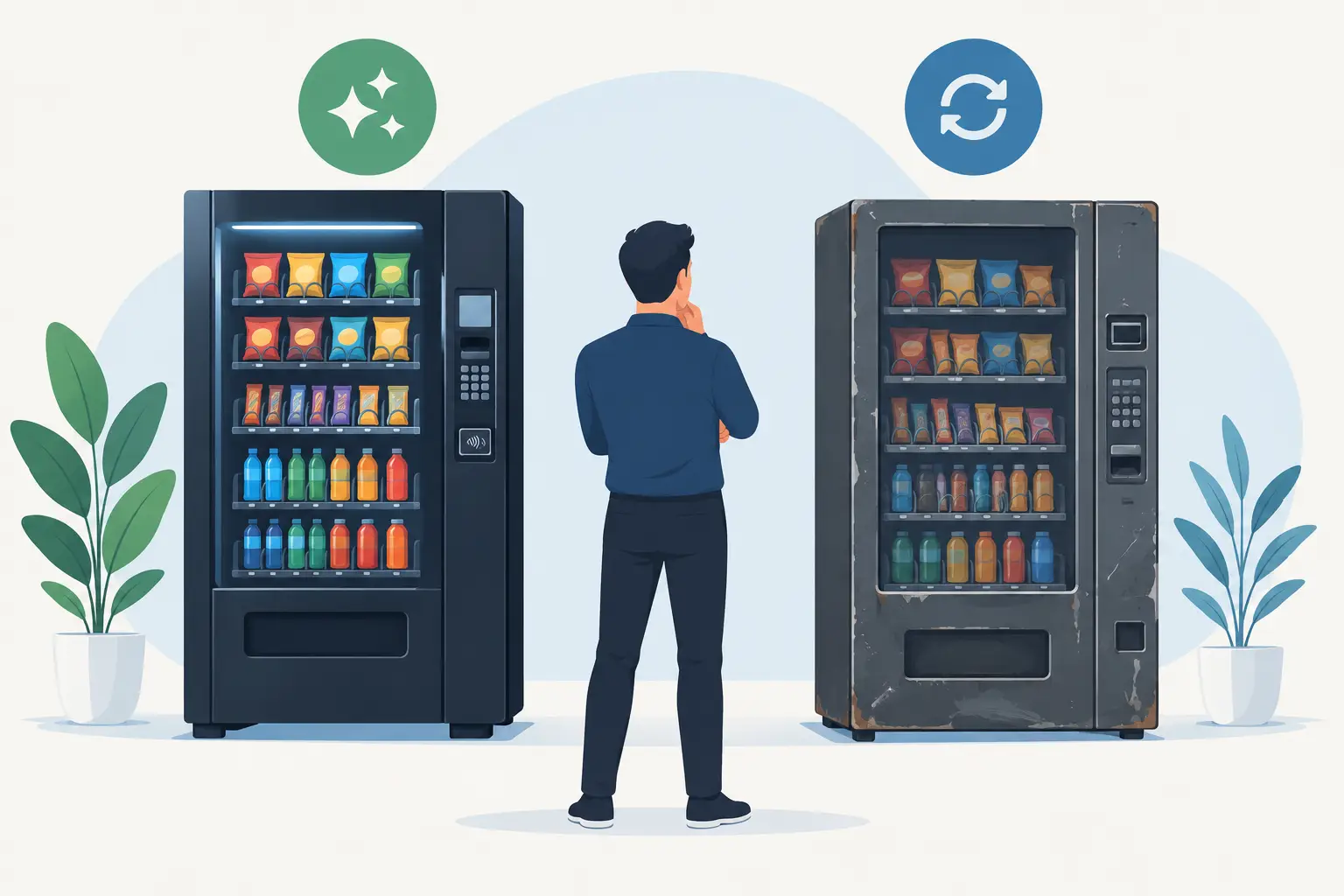
A $1,100 used machine can get a first location producing revenue quickly. A new cashless combo machine may cost several times more, but it can better fit a busy office where card payments and reliable uptime drive sales. That is the real decision behind new versus used vending machines: not which option is universally better, but which asset gives your specific location and budget the best chance to perform.
For a first-time operator, controlling startup costs matters. For an established route owner, a machine that reduces service calls or supports a stronger product mix may justify a higher purchase price. Start with the location, expected sales volume, and payment needs, then choose the equipment that supports that plan.
New Versus Used Vending Machines: The Core Difference
New vending machines offer current hardware, clean presentation, modern payment compatibility, and manufacturer-backed coverage. They are built for operators who want predictable equipment condition from day one. Many new snack, beverage, and combo units can be configured for card readers, mobile payments, telemetry, or other cashless technology that helps operators monitor sales and inventory.
Used vending machines lower the upfront barrier to entry. A quality commercial machine that has been inspected and priced correctly can be a practical way to start a vending business, test a location, or add capacity without tying up as much capital. Older equipment is often mechanically straightforward, which can appeal to operators who are comfortable handling routine repairs.
The trade-off is condition. “Used” can cover a wide range, from a lightly operated late-model machine to an older unit with cosmetic wear and components nearing replacement. The purchase price alone does not tell the full story. Buyers need to evaluate the machine’s age, functionality, payment setup, parts availability, and likely maintenance needs.
When a New Machine Is the Better Business Move
New equipment is usually the stronger fit when the placement is high-visibility, high-traffic, or expected to produce consistent volume. Think corporate offices, apartment communities, hospitals, fitness centers, retail spaces, and premium customer-facing environments. In these locations, a clean machine with a modern interface can affect whether people use it.
Cashless payment capability is another major reason to buy new. Consumers increasingly expect to tap a card or phone instead of carrying bills and coins. A machine that cannot accept the preferred payment method at a location may leave sales on the table. While some used machines can be upgraded, the cost and compatibility of that upgrade should be confirmed before purchase.
New machines also make sense when downtime would hurt the account relationship. If a location manager has given you one chance to prove your service, dependable equipment can be worth the added investment. Newer refrigeration systems, motors, controls, and vend mechanisms can reduce the chance that an aging component interrupts sales during the first months of operation.
A new unit is not automatically the right answer, however. Financing a premium machine for a low-volume break room can stretch the payback period far beyond what the location supports. Equipment should match the opportunity, not just the operator’s preferred feature list.
When Used Equipment Creates a Better Return
Used vending machines are often the practical choice for operators building their first route with limited capital. Instead of placing all available funds into one new machine, an entrepreneur may be able to buy multiple used units, secure more locations, and reserve cash for inventory, card-reader setup, transportation, and service.
They also work well for lower-risk placements. A laundromat, small auto shop, warehouse, community center, or employee-only site may not need a top-tier machine with every available feature. If the expected sales are modest, a dependable used snack or beverage machine can be the better financial fit.
Used equipment can be especially valuable when you know the machine type and can assess it properly. Established operators may already stock common replacement parts, understand specific model lines, and have a technician relationship. That experience reduces the risk of owning older equipment.
The mistake is buying the cheapest machine available without checking whether it can support the location. A bargain machine that only accepts cash may require an expensive retrofit. An older machine with difficult-to-source parts can become a service problem. Savings at checkout disappear quickly if the unit sits out of order or cannot carry the products customers want.
Compare Total Cost, Not Sticker Price
The true cost of a vending machine includes more than the listed price. Before choosing new or used, account for the expense of delivery, installation, payment hardware, inventory, repairs, cleaning, and the time required to service the machine. A lower purchase price can still be the more expensive route if the machine needs frequent attention.
For a used machine, ask about the operating condition of the bill validator, coin mechanism, cooling system if applicable, motors, control board, doors, locks, and display. Confirm that the machine vends reliably with the package sizes you plan to sell. Beverage selections, snack coils, and combo configurations need to suit your actual inventory, not just look flexible on paper.
For a new machine, focus on capacity and revenue potential. A large machine is not always better if the location has limited foot traffic or narrow product demand. Too much capacity can mean slower turns and more expired product. A well-sized machine with the right mix of drinks, snacks, or specialty items is easier to keep fresh and profitable.
It helps to estimate a simple payback period. Take the total installed cost of the machine and divide it by the expected monthly profit after product cost, processing fees, commissions, and service expenses. The estimate will not be perfect, but it reveals whether the equipment price is realistic for the location.
Payment Technology Can Change the Decision
Cashless vending is one of the most important dividing lines between new and used machines. A modern card-reader-enabled unit can accept the payment methods customers already use and may provide sales data that helps with restocking. That visibility is valuable when you are expanding a fleet and need to know which products, prices, and locations are performing.
Some used machines can accept card readers, but compatibility depends on the machine’s controller, wiring, and age. Do not assume every commercial machine can be upgraded at a reasonable cost. Confirm the hardware requirements before committing to a used purchase, especially if the placement has little cash traffic.
Technology-forward formats may also change the equation. Smart coolers and AI-powered unattended retail systems can support open-door shopping and broader product variety in the right setting. They are a larger investment, but for locations with demand for fresh food, healthier choices, or premium convenience, conventional vending may not be the best format.
Match the Machine to the Location
A good purchase starts with a location audit. Look at how many people pass through, when they are there, what nearby food options exist, and whether the location attracts cashless customers. Then choose the machine category around demand.
A beverage machine can work well where cold drinks are the clear priority, such as gyms, warehouses, and waiting areas. Snack-and-drink combo machines are often useful for smaller locations that need variety but do not have enough volume for two separate units. Specialty machines can make sense for laundromats, bowling centers, tobacco retail, and other environments with a clear product need.
Appearance matters more in some locations than others. A polished new machine can help win a property manager’s approval in an upscale apartment building or office lobby. In a back-of-house employee area, a clean, working used machine may deliver the same sales result at a lower acquisition cost.
Questions to Ask Before You Buy
Before selecting equipment, get clear answers to a few operational questions. Can the machine accept the payments your customers prefer? Does its capacity match expected traffic? Are the product selections adjustable for your planned inventory? What condition are the key components in, and how available are replacement parts?
Also consider who will service it. If you are new to vending, a machine with current technology and fewer immediate maintenance concerns may save time while you learn route operations. If you already maintain a fleet, standardizing on familiar used models may simplify parts, repairs, and training.
VendingMachinesForSale.net offers new, used, specialty, and smart vending options so operators can compare equipment around their actual placement and budget. The best machine is the one that keeps selling, fits the account, and leaves room for a healthy return.
Choose the equipment you can confidently stock, service, and keep operating. A machine that matches the location will do more for your route than the newest model or the lowest price ever could.